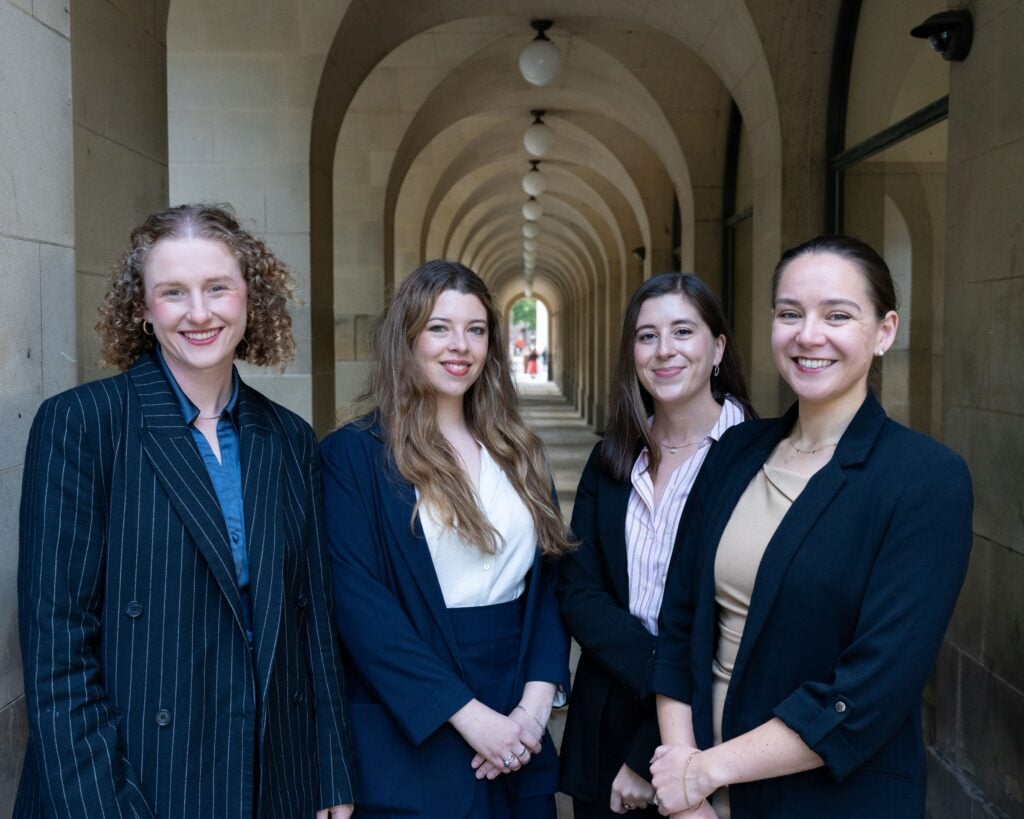

Juliet Harvey was the first chartered legal executive to hold the post of chair of Resolution, the national organisation with over 6,500 members across the family justice arena. Juliet leads Resolution’s work with the courts and sits on a number of national working groups dealing with family law issues, participating in regular meetings with senior judiciary, HMCTS and the Ministry of Justice. She is equally at home dealing with contested financial issues, including considerable experience dealing with pensions, company assets and inherited assets, and children issues, including advising grandparents and wider family members. Juliet can also advise on enforcement of financial awards, having a firm grounding in debt collection.
What was your career path to your current role?
I started my legal life working for HMCTS in Bury St Edmunds County Court straight from sixth form. After a few years I ‘jumped the counter’ and joined a local firm as a trainee legal executive in what was then a mixed litigation team. By the time I gained my CILEx Fellow status in 1994, I was dealing almost exclusively with family clients. In 2017 I joined Birketts, becoming a legal director in 2019, Ipswich family team leader in 2022 and partner in 2024.
Did you have any other career ambitions?
Growing up I had always wanted to be a teacher! Whilst working at the court service I realised I wanted to assist those going through the court system. That led to training as a legal executive. One of my supervisors while I was training dealt mainly with family law and she is responsible for my gravitating away from a more generalist litigation practice to exclusively family. My involvement with Resolution led to qualifying in collaborative practice, as a mediator and also as a Resolution Together Practitioner.
What keeps you motivated in your work?
Wanting to help couples resolve their differences with dignity, creating lasting bespoke solutions that are as individual as the circumstances of their family. Every client is different – that is what keeps me going, together with learning about new methods to assist clients in a better way.
I’ve developed a ‘one couple one lawyer’ practice over the past couple of years and love working with couples in this way. It draws together all the skills I have learned over the years. I co-work with other local Resolution members, including pension experts and financial professionals, who are able to speak to the couple together. This saves time, cost and ensures that the couple both hear the same information at the same time. In some cases this has unlocked matters for the couple, enabling them to think ‘out of the box’ and craft a way forward benefitting the entire family.
What has been the best development in family law in the last 20 years?
The introduction of no-fault divorce. The divorce, dissolution and separation Act 2020 received Royal Assent on 25.06.2020, the day after I became Resolution chair! (However, the credit for that lies with Resolution and their members who tirelessly campaigned for change for many years.)
And the worst?
From a legal perspective, LASPO 2012 and the impact of legal aid cuts in family cases on thousands of families going through separation and divorce. The impact has been huge.
Many people cannot afford legal advice and have no option but to self-represent. Broadly, 50% of cases going through the family courts are where both parties do not have legal representation. Last year there were increases of 13% on new financial remedy cases and private children law cases. Cases involving one or more self-representing people usually take longer.
That, coupled with the eroding of funding and resources for the family courts, together with the current judicial shortage in the south east, where I practice, has given us a triple whammy of factors that feed into substantial court delays which significantly negatively impact families.
If you could bring in one new piece of legislation for the sector, what would it be and why?
Funded early legal advice. A bit of advice, at the outset, could often set people on the right track, before positions are entrenched. We already have the mediation voucher scheme where couples can access a £500 government funded voucher to assist with the cost of mediation in relation to children issues. If a similar scheme could be set up funding a free advice or information session (a bit like a MIAM) people may be diverted away from courts, freeing up judicial time and court resources to reduce backlogs.
Research by the Law Society of Scotland shows that providing early legal advice significantly reduced broader government spending. Every £1 on Legal Aid in family cases saved £5 in reducing demands on the justice system.
I would also want to see legal aid rates urgently reviewed and increased in line with inflation each year (or every two years as now happens with court fees). I last dealt with legal aid cases in the late 90’s and applaud all those who continue to offer legal aid. I do not know of any other profession where fees have remained stagnant for such a long time.
What piece of legislation would you take off the statute books and why?
LASPO for reasons set out above.
What’s the best piece of advice anyone ever gave you regarding your career?
To never let myself be defined by my qualifications (or as some might perceive my ‘lack’ of qualifications). As a FCILEx I have at times been treated differently to those who are solicitors. I was proud to be the first legal executive to be chair of Resolution.
What advice would you like to give to someone just starting out?
Always be curious, never be afraid to ask why (or ask of yourself ‘why not’). Throughout our life we will come across many obstacles. Never let an obstacle defeat you. There is always a way to successfully navigate it – it may take time to get there, but with patience and effort, you can do it!
Tell us something people may be surprised to know about you…
I studied Japanese at school. I used to be a Bishop’s chorister at St Edmundsbury Cathedral and still have the medal to prove it.