
The social media ban for under 16’s could strengthen the position of parents seeking tighter controls on children’s social media use suggested a family lawyer after confirmation the new restrictions are expected to come into force in March 2027.
After the timing of the proposed ban was confirmed by culture secretary Lisa Nandy, Anita Hennessey, a family law partner at HCR Law, suggests the new rule could help remove a common source of conflict between separated parents, and influence how disputes over children’s online lives are viewed by the family courts.
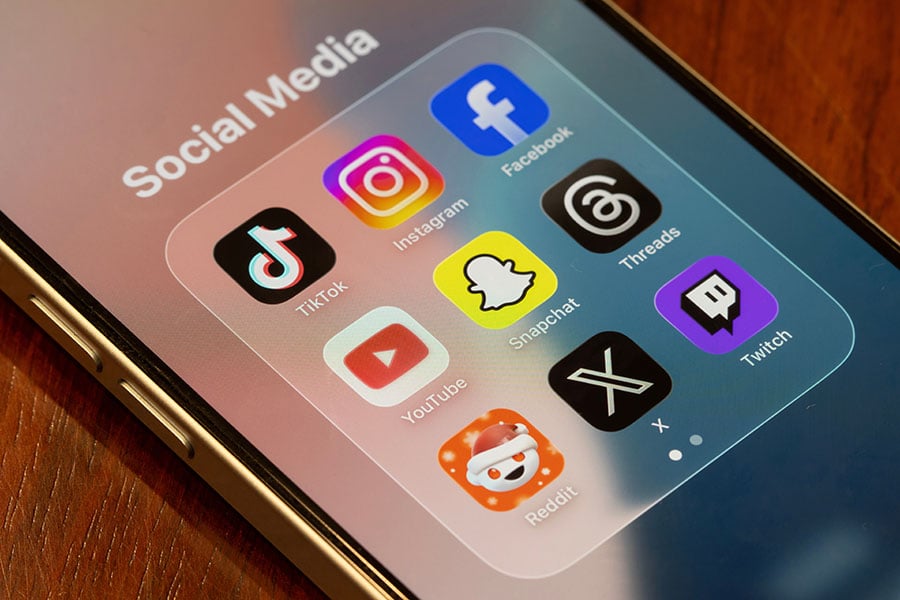
Under the new restrictions, social media platforms, including TikTok, Instagram and YouTube, will be prohibited from offering their services to children under 16, with responsibility for enforcing the restrictions falling on the technology companies rather than parents. As a family lawyer who regularly advises separated parents on child arrangements, Hennessey said disagreements over social media and wider screen use are already a significant issue: “Social media access can become a real source of conflict between separated parents, particularly where one parent is trying to impose firm boundaries and the other takes a more relaxed approach.
“That can leave the stricter parent feeling like the ‘bad cop’, especially if the child gravitates towards the household where they have greater access to their phone, gaming or social media.”
Hennessey adds the ban could change that dynamic by providing a clearer framework for parents and the family courts: “When the ban is introduced, a parent trying to enforce those boundaries is likely to be in a much stronger position if the issue arises as part of a child arrangements dispute.
“It will also give separated parents a common starting point. Instead of arguing over whether an under 16 should have access to Snapchat, TikTok or another social media platform, there will be a clear national rule applying in both households.”
Separately, the increased focus on children’s online wellbeing could also lead to greater scrutiny of excessive screen use, she added: “Screen time is a different issue and the new rules do not limit how many hours a child can spend on a phone, tablet or games console.
“However, I do think the wider focus on children’s online wellbeing may encourage courts to look more closely at excessive screen use where it affects a child’s welfare. I have dealt with cases where screen use has been extraordinarily high and has become part of a much wider dispute between parents. If it is affecting a child’s sleep, education, activities or relationships, we may increasingly see it treated as part of the overall welfare picture rather than simply as a difference in parenting styles.”