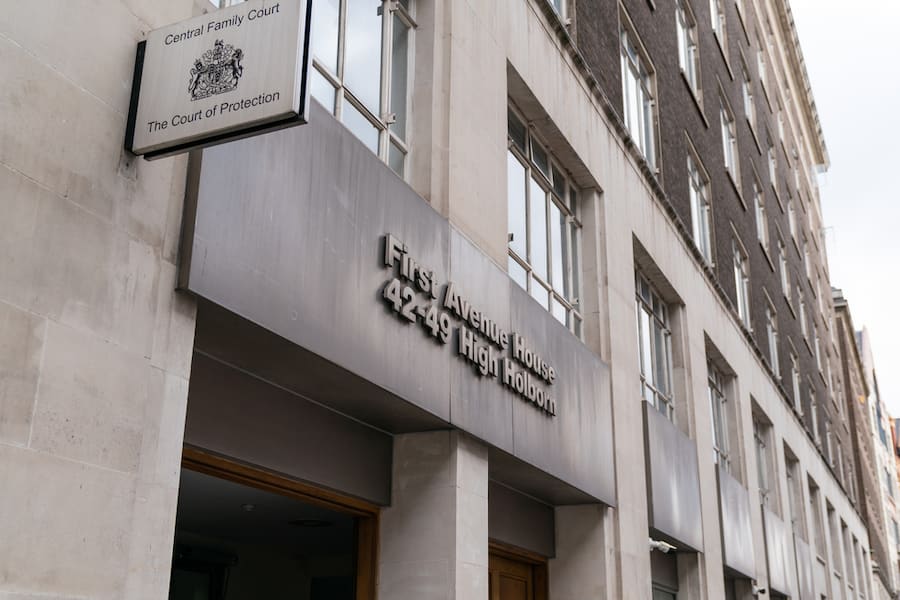
Mr Justice MacDonald has handed down judgment in what is thought to be the first Parental Order case in relation to a surrogacy arrangement that took place in China in D & Anor v K (Illegal Chinese Commercial Surrogacy) [2026] EWFC 279. Natalie Sutherland of IFLG acted for the applicant Intended Parents, instructing Mr Andrew Powell KC.
Whilst the Parental Order was made, the Judge has reported his decision to highlight the court’s concerns with a number of aspects of the case, describing it as “another example of intended parents failing to undertake sufficient due diligence with respect to the arrangements they entered into by way of an international surrogacy agreement”.
Facts
The intended parents are D and C, a same-sex male couple living in Country B. D is a dual Chinese and UK citizen. C is citizen of Country A. They married in London, but their marriage is not recognised in Country B, Country A or China. The respondent is K, a gestational surrogate who is a Chinese citizen.
They entered into a surrogacy arrangement with a third-party intermediary, F. The surrogacy agreement was signed by the intended parents and F, and all payments were made to K via F.
The child, G, was born in 2025 in China. D, as the biological father, was named on the birth certificate alongside the surrogate K. D and C took over G’s care immediately and returned to Country B. The parental order application was made in July 2025.
At the case management stage, the Judge made directions for the appointment of an expert in Chinese surrogacy law to establish whether surrogacy was legal in that jurisdiction (the court understanding that it was illegal) and invited the Secretary of State for Health and Social Care to intervene (who declined to intervene).
The expert’s report established that surrogacy in China is illegal, that the surrogate is considered the legal mother and that the biological father can claim paternity by being named on the child’s birth certificate. As the surrogate and biological father are not in a relationship, the child would be treated in the same way as a child born out of wedlock. An intended father with no biological relationship to the child, in this case C, has no route to claim legal parentage in Chinese law.
The intended parents had, therefore, undertaken a surrogacy journey in a jurisdiction where it was prohibited and, as such, the surrogate and the child were placed at risk. The court therefore had to consider a number of issues before deciding whether to make the parental order, notwithstanding that the surrogacy took place in a jurisdiction where it was illegal.
Issues
Domicile
At least one of the intended parents must have a UK domicile to be eligible to apply for a parental order. D was born with a Chinese domicile of origin but had acquired a new domicile of choice of the UK. As D, however, lived in Country B, the court needed to be satisfied that his stay in Country B was temporary and that he had an intention to return to live in the UK, meaning that his domicile of choice continued despite living in Country B.
The court was satisfied on the evidence that this was the case on the following bases; (1) D had lived in the UK for over 20 years and had spent the majority of his life here (2) his acquisition of British citizenship showed his intention to remain here and make England his home (3) he continued to own property here whilst working abroad (4) his same-sex marriage was not legally recognised in Country A or Country B (5) his stay in Country B for work was temporary and did not provide a route to permanent status in that jurisdiction (6) C’s status in Country B was also temporary.
Consent
The applicants understood from K that she had not told her family that she had acted as a surrogate. Concerned that if she were required to provide her consent before a Notary Public that her family and community would come to know that she had been a surrogate, an application was made to the court for permission for K to provide her consent before the Parental Order Reporter over a WeChat video call with a Mandarin interpreter. Permission was granted and all the documents were served on K via WeChat and the PO Reporter was able to speak with her directly and witness her signing the consent form. Despite this permission having been given on the basis that it was later discovered that surrogacy was illegal in China, the Judge said this [42]:
“I make clear that had it not been for the ability of the Parental Order Reporter to meet [K] by video link, confirm her identity and witness her signing the requisite form, in addition to speaking to her and ascertaining she had no wider concerns notwithstanding the illegality of surrogacy in China and the discrepancies regarding the amounts paid to her, the court would have had no power to dispense with her consent”.
Payments
The payments to the surrogate in this case were made by the applicants to F who then disbursed them to the surrogate via different named individuals. As such, the applicants did not have a clear paper trail of monies being paid by them to K and it was not clear what the payments she did receive related to. This is an issue for the court as it is not clear if the payments were for reasonable expenses which do not need the court’s authorisation, and other payments which would not be considered reasonable which would need the court’s retrospective authorisation.
In addition, because commercial surrogacy is illegal in China, the court was concerned with authorising any commercial payment to the surrogate which would be illegal in China with the risk that the English court would be understood by others to be endorsing that illegal practice, which it did not.
Giving the wording of section 54(8) of the Human Fertilisation and Embryology Act 2008 its ordinary meaning, the Judge concluded that the words “unless authorised by the court” referred back to the payments specified in section 54(8)(a) – (d), and therefore it is open to the court to authorise payments which were made in consideration of (a) the making of the order, (b) any agreement required by subsection (6), (c) the handing over of the child to the applicants or (d) the making of arrangements with a view to the making of the order. Further, as s54(10) provides that a parental order may be made where the surrogacy took place ‘elsewhere’ than the UK, and s2 of the Surrogacy Arrangements Act 1985 only prohibits commercial surrogacy in this jurisdiction, s54 allows the court to authorise payments made in another jurisdiction, even if they are of a commercial nature. The test as to whether those payments should in fact be authorised is whether to do so would be in the child’s best interests, holding that child’s welfare as the court’s paramount consideration.
Where the court is being asked to authorise those payments which have occurred illegally in that other jurisdiction, the court also needs to consider the issue of public policy.
On the evidence, the court found that there was nothing to suggest that the applicants sought deliberately or wilfully to evade the authorities in China and there was no evidence that D and C sought to exploit K or engage in any form of child trafficking in China or in this jurisdiction and no evidence of fraud, forgery or deception. They did fail to undertake sufficient enquiries as to the legal position in China and were ignorant of the legal prohibition and relied, unwisely, on the third-party facilitator in China and there was a risk that K would be exploited. The fact that the Parental Order Reporter was able to speak directly to K acted to mitigate the concern of risk.
The Judge, whilst deprecating the course taken by D and C, was satisfied that this case was not a clear case of abuse of public policy such as to prevent the welfare considerations in respect of G permitting the authorisation of the payments and the payments were therefore authorised, albeit ‘reluctantly’. The Judge was also satisfied that public policy does not prevent the welfare considerations in respect of G from permitting the court to make the parental order if satisfied that to do so is in the child’s best interests.
Best Interests
In considering best interests, the Judge agreed with the Parental Order Reporter that it was a reasonable assumption that G would want the people who he considers as his parents to be ratified in law. D and C were providing him with a secure and stable home, and they could meet G’s identity needs as a child born through surrogacy.
The Judge was therefore “satisfied that it is plainly in G’s best interests for his relationship with the applicants to continue to develop and to endure, and for the applicants to be empowered to take decisions for him, as they will now form the foundation of his physical, emotional and educational development for the remainder of his minority and well beyond”.
Conclusion
Despite the court “strongly” deprecating the applicants’ decision to undergo surrogacy in an illegal jurisdiction, with all the associated risks, the Judge was satisfied that it was in G’s best interests to make the Parental Order.
That said, the Judge made it clear in his conclusion that his decisions “is not a licence to engage in unlawful commercial surrogacy arrangements abroad”. Intended Parents should not assume that because the Judge made the order in this case on these facts, that another judge in another case will do the same. The courts will not simply make the order because they are presented with an apparent fait accompli on the basis that the child is already in the care of the intended parents. The court will still have to scrutinise the arrangement and consider public policy as well as the child’s best interests.
What can future intended parents take away from this case?
Most importantly, when considering any surrogacy arrangement outside this jurisdiction, specialist legal advice must be taken before embryo transfer in that local jurisdiction. In addition, specialist legal advice should also be taken in this jurisdiction. In this case, English legal advice was only sought after the baby had been born and no legal advice had been sought in China.
Just as importantly, the surrogate should also receive her own independent legal advice, there should be a clear line of communication between the intended parents and the surrogate separate from any third-party agency or intermediary and the intended parents should have clear records of all payments made to the surrogate and the reasons for those payments. If payments are made to a third party and then disbursed to the surrogate, records are still required.
About the author
 Natalie is widely recognised as a leader in modern family law, with particular expertise in UK and international surrogacy, legal parentage, known donor and platonic co-parenting agreements, embryo storage, and posthumous conception. Alongside this, Natalie is an experienced divorce and children solicitor and advises on the full range of complex family law matters, including divorce and financial remedies matters, and children disputes with cross-border elements.