
A judge has ordered a husband to pay his wife £110,000 after he failed to “provide a scintilla of accurate disclosure” about his assets and acted in a “deliberate and calculated” way to leave his wife and child at a financial disadvantage while “spending significant sums on himself”.
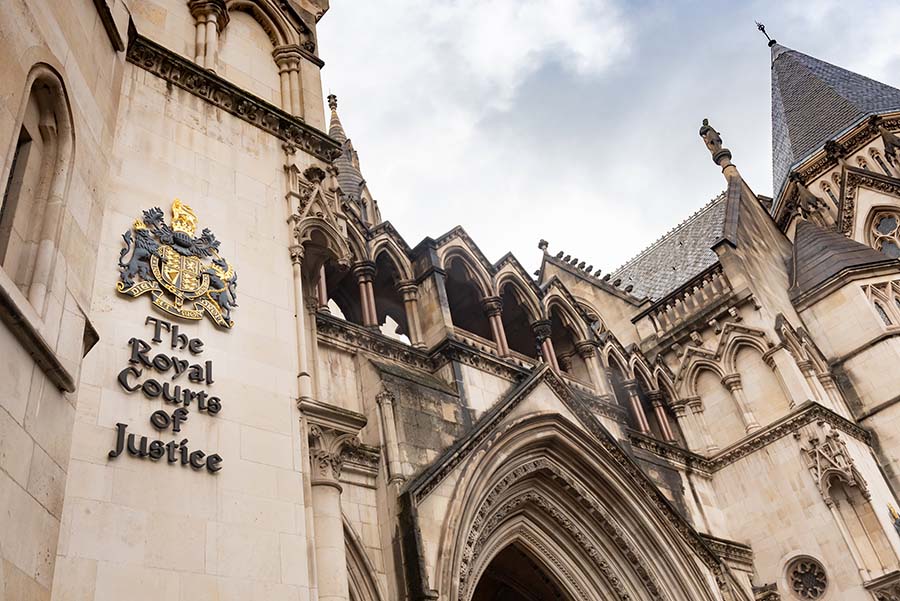
The judgment in HJ v QY (Rev1) [2026] EWFC 245 (B), by Deputy District Judge Nahal-Macdonald, was published following a short verbal decision in a financial remedies case at the Royal Courts of Justice. The final hearing included evidence from the wife, but the husband did not attend.
The financial remedies case had taken more than two years and 15 court hearings “due to the disengagement, defiance and obstruction of H”, DDJ Nahal-Macdonald said.
The judgment, which also compelled the husband to donate £750 to the Access to Justice Foundation, was published by DDJ Nahal-Macdonald because it has “wider public interest” for other litigants.
The applicant was referred to as W during the proceedings, and the respondent as H. W is in her mid-thirties, H is in his early 40s, and they have a child together, known in court as C.
W and C live with W’s parents and cannot afford their own home. Meanwhile, H, despite still being legally married to W, has since remarried, owns three cars, buys designer clothes and has been on numerous foreign holidays, in what the judge called a “lifestyle far in excess of that reported”.
In 2025, H came before the lead judge of the financial remedies court, Judge Edward Hess, and contempt proceedings against him were contemplated.
As a result of the “obstruction” by H, W had to apply for “numerous” third-party disclosure applications, including from banks, the Driver and Vehicle Licensing Agency and others, to piece together the true extent of H’s income and assets.
H had claimed he was an employee of a company and had income far below full-time working hours and minimum wage. But the court heard that during the 12 months from March 2025 to March 2026, he received income into two current accounts with Santander and Starling totalling over £88,000.
W also provided evidence that H had made transfers totalling £65,000 to offshore holdings during their marriage, details that were at odds with his stated means.
The court also heard that H has child maintenance arrears of more than £35,000.
DDJ Nahal-Macdonald noted: “I find that in all the circumstances, the systemic non-disclosure by H has been deliberate and calculated to leave W at a disadvantage. The fact that H does not pay anything close to the sum ordered by the CMS [Child Maintenance Service], and that he has already re-married, and that he has suppressed his true income, are all factors that can be taken together to demonstrate H’s disregard for W and his lack of respect for court orders.
“H has significant undisclosed income and access to significant valuable assets, including high value performance motor vehicles and designer goods. I find that H’s lifestyle is such that he is spending significant sums on himself to the detriment of W and C, which ought to be deprecated.”
He added: “In the circumstances, I have considered the length of the marriage as against the material non-disclosure. This is a case where W is of limited means and has obvious shortfalls in her income which tend in favour of a capital award so that she can rebuild her life and provide for her and C going forward to have their own accommodation. I have heard thoughtful evidence as to her needs in that regard and am persuaded that a lump sum is appropriate.
“Accordingly, I order that H pays to W the sum of £110,000 within 28 days of this order. W has leave to apply for enforcement of the above sum after 28 days without further delay. Her counsel has advised her as to appropriate methods.”
The judge praised the pro-bono work of W’s counsel, Zacharie Mouillé, and ordered H to pay the £750 to the Access to Justice charity, in recognition of his valuable time.