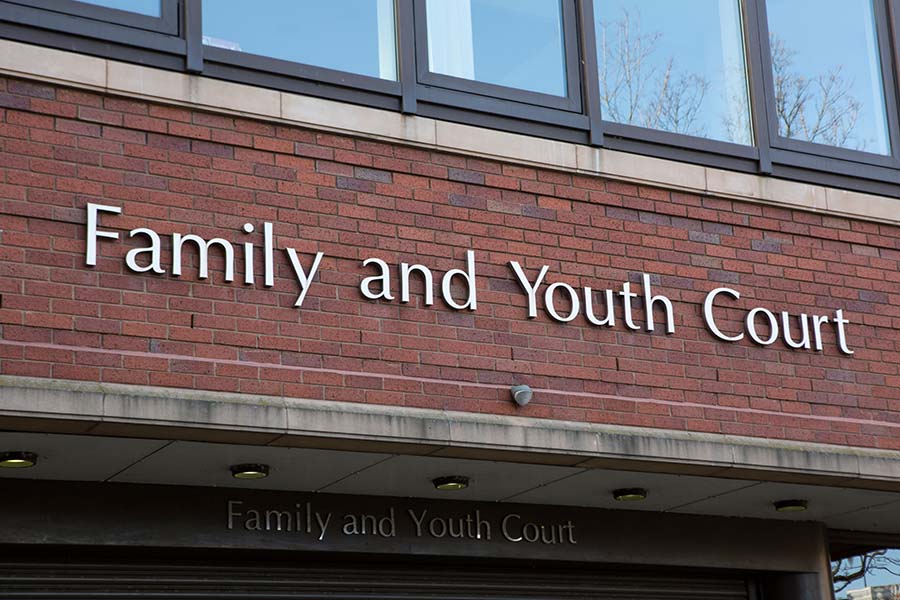
The government has launched its long-awaited consultation on reforms that would give cohabiting couples greater financial protections when relationships end, and automatic inheritance rights when a partner dies without a will.
The proposals would also strengthen safeguards for domestic abuse survivors and explore making pre- and post-nuptial agreements legally binding, with minsters arguing the changes would modernise family law and better reflect contemporary relationships. Couples will be considered cohabitants if they have lived together for at least three years or share a child.
Justice secretary David Lammy said: “When a relationship comes to an end, each partner should have the support and certainty they need to rebuild their life. We’re launching this consultation to make sure our new family law builds a fair system that offers the most vulnerable protection in the event of a breakup, and at a time where the country is facing cost of living pressures.
“Whether you’ve been left bereaved by the sudden and unexpected death of a partner, or escaped horrific domestic abuse, our laws should work to protect you. These reforms strike an important balance between tradition and modernity. I’m determined that our justice system should work for everyone who needs it.”
Sital Fontanelle is head of Kingsley Napley’s Family team and a member of Resolution’s Cohabitation Committee. Responding to the announcement, she said: “Increasing protection for cohabitating couples is long overdue. It is no longer tenable to say parties wanting protection should simply get married because with declining rates of marriage, especially amongst younger couples, many are losing out. Also, more than half of children today are born out of wedlock and it is partly they who need protecting. We urgently need the law to be updated to reflect societal norms and so this consultation is very welcome.
“Making pre- and post-nuptial agreements legally binding would also be a positive step. Our survey undertaken in conjunction with YouGov last year found that 60% of the UK population supported the idea of law reform so that these agreements are automatically upheld on divorce.
“Modernising the law on this will bring more certainty and less stress to the process of splitting finances on separation. In our experience whether couples are getting married for the first, second or even third time, nuptial agreements are now a standard part of the conversation and wedding related admin.
“Making them legally binding will benefit those entering into them and will also help to reduce the burden on the Family courts which can only be a huge plus.”
Claire Andrews, a family partner at Osborne’s law, said: “These proposed changes have been a long time coming and will close a legal loophole that has left some unmarried people who split with their partner destitute, as they had no legal recourse to get a share of the relationship pot. The current laws are archaic and not fit for purpose in a modern society and cannot come quickly enough.
“Additionally, the protection of survivors of domestic abuse is hugely important and another area where the current laws are seriously lacking. Pre and post nuptial agreements are increasingly popular, but our clients are often concerned that they may are not legally binding. The fact that this consultation is looking at this area will relieve many people going through this process.”
Brett Dixon, vice president of the Law Society of England and Wales said: “The Law Society of England and Wales welcomes and will respond to this long-awaited consultation.
“For too long, millions of people in cohabiting relationships have not had basic financial protections, which is a particular problem if one of them dies or if there is domestic abuse. Updating the law to reflect modern relationships is vital. However, rights are only meaningful if we can all actually access and enforce them. Without legal aid and adequate court resource, these new protections may only exist on paper.”
A statement issued by Resolution, the family law reform group, on Friday morning welcomed the announcement that the government is consulting on plans to provide greater financial security to over 3.5 million unmarried couples.
The body, which represents 6,500 family lawyers and other professionals who support families through separation, has heralded the announcement as a “landmark move towards fairness for families’”.
Melanie Bataillard-Samuel, chair of Resolution, said: “For too long, unmarried partners have been placed at risk of significant financial hardship and uncertainty when their relationship comes to an end through separation or death. The current law has simply not kept pace with changes in society, and often enables perpetrators of domestic abuse to continue that abuse after a relationship has ended.
“Today’s announcement is a welcome and significant step towards ending the endemic unfairness for cohabiting couples that Resolution’s 6,500 members see day in, day out. We look forward to these reforms being implemented to create a system that is fit for modern society.”
Jo Edwards, who chairs Resolution’s Family Law Reform Committee, added: “Resolution has been campaigning for these reforms for many years. Since securing the introduction of no-fault divorce a few short years ago, our members have consistently told us that cohabitation was the next major priority for change. Today’s announcement is testament to the hard work of Resolution members across the country.
“After working closely with government officials and parliamentarians, we are delighted that we now have a blueprint for reform which represents a landmark move towards fairness for families.”
The consultation paper, expected to be published today, is anticipated to seek views on proposed reforms in a range of areas alongside protection for cohabitants at the end of their relationships, including financial remedies on divorce, and what happens when cohabitants die without leaving a will.
Graeme Fraser, chair of Resolution’s Cohabitation Committee, said: “Reform in this area is long overdue, and it’s great to see Resolution’s work over the years bear fruit. As professionals who see people dealing with the fallout of the current lack of legal protection, we know just how much these reforms are needed.
“We look forward to providing our views on the government’s proposals, and will continue to work with officials and ministers ahead of any legislation being introduced, which we hope will be introduced at the earliest possible opportunity.”
Today’s Family Lawyer will share further reaction and updates as the story develops.