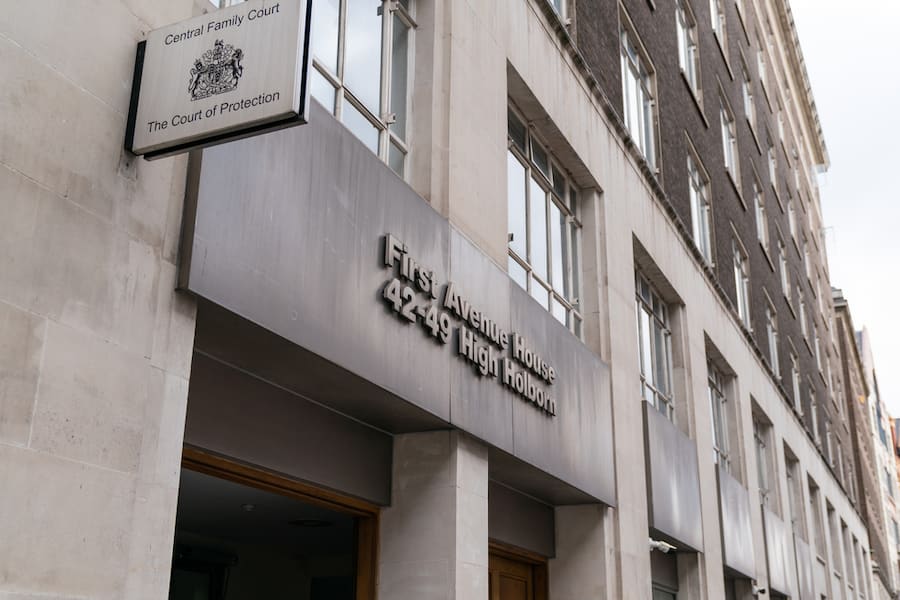
The Court of Appeal has stayed an abduction order for a child to be returned to his father in Texas and ordered the case to be reconsidered six weeks after the birth of the child’s sibling, due in September.
HG (Abduction: Application to set aside return order) concerns a dispute between a married couple – a man who is an Indian national with a US Green Card, and a British woman – who previously lived together in Texas. Their child, HG, was born in 2024, and the mother is pregnant with the couple’s second child.
HG was born in the US and holds dual citizenship. Soon after HG’s birth, the mother told the father that she wished to travel to the UK with HG. The father agreed, although the terms of the agreement were disputed. On 15 March 2025, the mother and HG flew to the UK to stay with her parents. In April 2025, the mother told the father that she did not want to return to the USA.
During a period of separation, where HG and his mother resided in the UK and the father lived in Texas, the couple considered themselves to be in a relationship. During a family holiday in late 2025, a second child was conceived.
The relationship broke down following a dispute about where the family should live and the father filed a civil case for his son to be returned to Texas under the 1980 Hague Child Abduction Convention.
In January 2026, a judge agreed HG should be returned “forthwith and by no later than 11.59 (UK time) on 24 June 2026”. He further ordered that the mother should take the child to the USA and that the father should pay for the mother’s and the child’s flights.
The order also included a number of undertakings given by the father, described as “giving binding and enforceable obligations in this jurisdiction” with the intention that they should also be binding and enforceable in the USA.
They included not to institute or voluntarily support any proceedings arising out of the removal or retention of the child, to pay certain sums to the mother, starting with the sum of $7,500 by 16th June 2026, and to pay full health insurance in the USA for the mother, HG and the unborn child upon its birth for six months after their arrival in the USA.
In early June, the mother, acting for herself, applied to the court for a stay on the judgment on the basis of her health with letters from medical professionals revealing her anxiety and risk to the pregnancy. The application was refused.
Two days later she filed another notice of appeal and the return order was stayed pending determination of the application for permission to appeal. On 7th July, permission to appeal was granted and the stay extended until the appeal was determined. By that stage, the mother had filed an application to rely on fresh evidence. That application was listed for determination at the hearing of the appeal.
The hearing was fixed for 21st July, when the mother was 34 weeks pregnant.
A few days before the hearing, the mother was able to obtain pro bono representation. Ms Ruth Cabeza, instructed by the Free Family Representation and Advocacy Project, argued the judge had failed to have regard to the fact that stress can be a significant cause of hypertension which poses significant risks for a pregnant woman and her unborn child and had failed to take into account the deterioration in the mother’s health since the hearings on 2nd and 3rd June.
Ms Cabeza invited the High Court to allow the appeal and set aside the return order, or stay the return order until after the birth of the child.
The Court of Appeal judges agreed to stay the order until six weeks after the baby was born, with Lord Justice Baker explaining in his written decision: “The simple fact, in the end acknowledged by [Mark Jarman KC, for the father], is that the current order for the mother to return HG to the US cannot be implemented until after she has given birth. In those circumstances, this Court was faced with two options – either to order that the child return to the US now with his father or stay the order pending the birth of the baby.”
As HG had not seen his father for several months and had never left his mother, the judge described the first option as “not realistic”.
He continued: “I would allow the appeal, remit the application to set aside the return order to be heard by another judge – who should, I think, be a full judge of the Family Division – on the first open date six weeks after the birth of the baby…The stay of the return order dated 3rd June 2026 shall be extended until the application to set aside the order has been reheard.”
“At the end of the hearing, we encouraged the parties to arrange for the father to spend time with his son in the days following the hearing, and after hearing the parties’ proposals we gave an informal indication of the level of contact we considered would be appropriate and in the child’s interests. I hope that those arrangements proceeded without difficulty and urge the parties to consider what further contact should take place in the next few weeks pending the next stage in these proceedings.”