
Securing evidence that stands up in court starts with certainty and admissibility, particularly where timely, legally sound DNA evidence is required in cases involving paternity, inheritance, and immigration. For family lawyers, navigating the strict requirements for court admissibility – particularly when it comes to the chain of custody – can be a complex challenge.
To highlight best practice throughout the process of legal DNA testing, Charlotte Haskayne, Business Manager for NorthGene™ – a leading Ministry of Justice approved provider of legal DNA testing, has answered the critical questions on the procedural and practical considerations every family lawyer needs to know.
1. For a test to be court-admissible in the UK, what are the absolute ‘must-haves’ regarding the testing provider’s accreditation?
This is the most crucial consideration. Legal DNA tests must be conducted by testing providers that are accredited to UKAS ISO 17025, which ensures the highest standards of quality and reliability from sample collection through to testing and analysis. Furthermore, the provider must also be on the Ministry of Justice approved list of DNA testing providers.
NorthGene™ holds these mandatory accreditations, ensuring we adhere to the stringent legal requirements for court admissibility. This provides solicitors and the court absolute confidence that the results are irreproachable.
2. The chain of custody is paramount. How does NorthGene™ ensure the integrity of samples from start to finish?
Our entire process is designed to maintain integrity throughout the entire process.
Firstly, samples must be collected by an independent, impartial third party. This might be a GP, registered collector or social worker. To streamline the process and provide a high level of control, we facilitate all collection arrangements. Our sample collectors will arrange an appointment with the participants at their earliest convenience and verify the identity of all participants using the mandatory photo ID, such as a driver’s licence or passport and two passport-sized photos. These photos are then signed by the collector at the time of sample collection. Once complete, samples are sealed in tamper-proof packaging at the collection point before being sent to our accredited laboratory for testing and analysis.
This rigorous process eliminates the risk of tampering or contamination, ensuring every sample is collected, handled, and tested within a fully controlled, compliant environment.
Additionally, we maintain data protection and confidentiality throughout the process. This is done by only communicating with the lead solicitor on the case and we do not share details with anyone else unless they are explicitly listed as key contacts upon registering the case with us.
3. What information do you need to begin the legal DNA testing process?
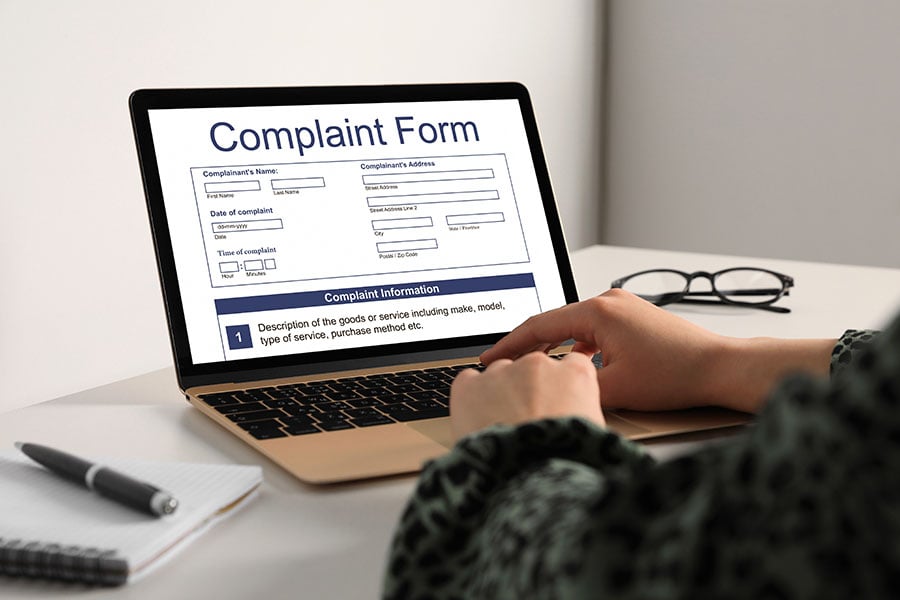
It is important that as much information is provided when registering a legal DNA testing case with us. The registration form details everything that is required, including:
- the participants’ location and where sample collection is expected to take place – this may be the participants’ home, GP or your office,
- contact details for the participants so that sample collection can be arranged efficiently,
- who is signing for the child if they are under the age of 16
-
- in cases that someone other than the mother is signing, we require proof of parental responsibility – for example, if the father is known and signing, the birth certificate is sufficient.
- If the child has been removed from the home, an Interim Care Order and contact details for the social worker who is signing consent are required.
- the details of who should receive the final report, such as yourself as the solicitor working on the case.
4. What is the typical turnaround time from sample collection to results?
We understand that family law involves strict timelines. As such, we process and issue results within 2-3 working days of all samples being received at our Deeside-based laboratory.
The report is issued to those listed on the registration form, and it is then the responsibility of these recipients to pass the results on to the participants. This maintains strict adherence to data protection regulations and professional confidentiality standards
5. How do you handle geographically separated clients, especially those requiring sample collection across different UK regions or overseas?
To streamline the sample collection process, NorthGene™ has a team of trained, independent collectors who will conduct sample collection across the UK.
For international cases, such as for immigration purposes, we require the contact details for a doctor abroad (name, address, mail and phone number), who will be completing sample collection. This will enable us to send the sample collection kit directly to their office, rather than to the participants, so that chain of custody is maintained.
6. What about more complex situations beyond paternity? Can NorthGene™ assist with siblingship or grandparent testing for other family law matters?
Absolutely. While paternity is common, NorthGene can provide a full scope of DNA relationship testing services. These include:
- Siblingship
- Maternity
- Avuncular (aunt/uncle to niece/nephew)
- Grandparentage
These services are more common in cases relating to inheritance and probate disputes, or immigration. All relationship tests are processed under the same strict procedures. This consistency guarantees that, whether it’s paternity or grandparentage, the results are scientifically sound and legally admissible.
7. What guidance can you offer family lawyers?
When instructing NorthGene™, you are assigned a dedicated Account Manager, who will serve as your single point of contact throughout the process to ensure seamless support. This manager is available to answer your queries, confirm that all required details are correct, notifies our sample collectors to make the appointment and provide key updates so that any unnecessary delays are prevented.
Our pricing is also fully compliant with Legal Aid Agency guidelines.
Ensuring Best Practice in Legal DNA Testing
The key takeaway for family lawyers is clear: choosing a DNA testing partner like NorthGene™, which prioritises accreditation, a rigorous chain of custody and customer support, is not just a preference – it’s a necessity for ensuring legal admissibility and a smooth litigation process. By understanding the procedure, family lawyers can instruct with confidence, securing reliable, trustworthy results for their clients and the court.
Learn more about a NorthGene™ legal DNA test on their website, or to register a case today, click here.
This article was submitted by NorthGene™ as part of an advertising agreement with Today’s Family Lawyer. The views expressed in this article are those of the submitter and not those of Today’s Family Lawyer.