
The government is seeking views on a proposed shake-up of marriage laws that will give couples more choice over where they get married.
The proposals aim to make getting married simpler, more affordable and more meaningful by shifting the focus from the building in which they take place to the promises made by the betrothed.
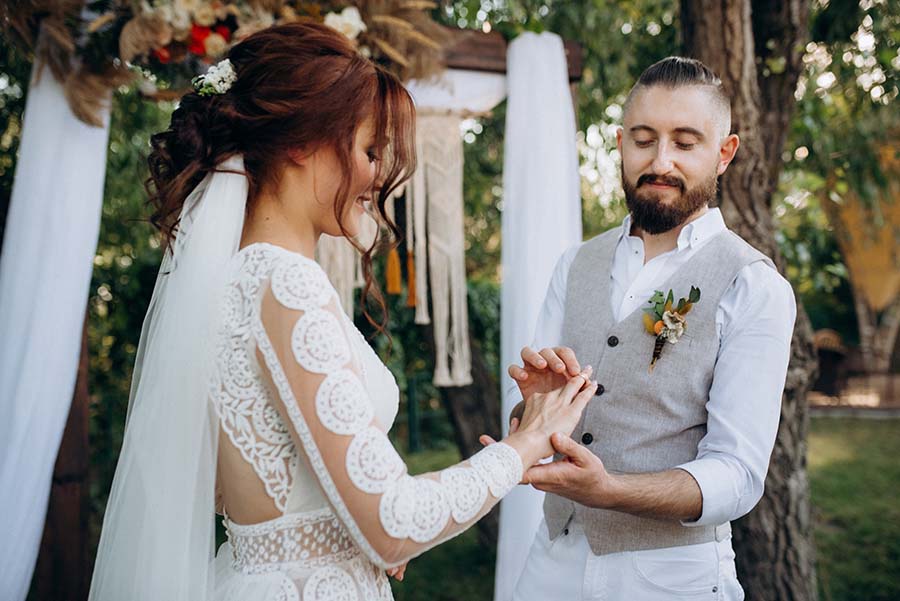
Under the new rules, weddings will be legal in open air locations such as forests and beaches, and in unusual venues such as boats and castles.
The changes will help reduce the cost of a ceremony, the Ministry of Justice said, which currently stands at an average of £20,000. Venue hire typically costs around £6,000 before any catering.
“This is unrealistic or impossible for many, with half of unmarried men and a third of unmarried women in relationships citing costs as a reason for not marrying,” the MoJ’s statement said.
“Giving couples more choice over where they marry could open up more affordable options, while keeping the lifelong commitment of marriage at the heart of every ceremony.”
The current system treats certain faiths and belief groups differently, meaning some couples must choose between a ceremony that reflects their beliefs and one that gives them full legal protection.
Under the proposals, faith-based ceremonies will be legally recognised.
While giving couples greater freedom, the proposals would maintain strong protections to ensure weddings remain meaningful and legally robust, the MoJ promised.
Officiants will have to meet strict requirements to be able to conduct weddings and will determine if a location is suitable for a ceremony. Venues that don’t uphold standards can be deauthorised.
To protect against forced, predatory and sham marriages, couples must complete a two-stage process, including an in-person interview, to verify their identity and demonstrate eligibility to marry.
But despite the safeguards, Keystone Family Law partner Gianna Lisiecki warns vulnerable people could still be left exposed.
“By making weddings more affordable and flexible, the new law broadens the appeal of marriage, but it also risks attracting predatory and sham unions,” she said.
“The government’s proposed two-stage notice process, with online checks and in-person registrar interviews, is a smart step forward to weed out forced or fraudulent marriages. However, these safeguards will only be effective if they are properly resourced and enforced, or vulnerable people could be left exposed.
“The shift from venue-based regulation to officiant-based regulation brings clear benefits in terms of flexibility, but it will also place greater emphasis on effective vetting, training and oversight. Without robust safeguards, there is a risk that fraudulent, coercive or otherwise invalid marriages may become harder to identify.
“Ultimately, increasing accessibility should not come at the expense of safeguarding. We may see more marriages, but potentially just as many divorces and legal battles over validity. The government must tread carefully to ensure the reform’s benefits aren’t overshadowed by unintended consequences.”
The justice minister, Baroness Levitt KC, said: “The institution of marriage is a cornerstone of British life and a wedding is far more than a legal formality, it is often one of the most important days of a couple’s life.
“But we know the law isn’t working equally for everyone. No one should have to choose between a ceremony that honours their faith, culture and traditions and one that gives them legal protection. These proposals untie outdated restrictions so all couples can officially tie the knot in a way that feels right for them.”