

Rachel Roberts, UK managing director of Stowe Family Law, reflects on the impact of no-fault divorce four years on from the landmark legislation, and shares her views on how family law structures and the laws surrounding them haven’t kept pace with societal change.
Divorce has never been an easy step for any couple to take. Nobody wakes up suddenly one day and decides to submit a divorce application. It often comes after months, years or even sometimes decades of uncertainty, fear, grief and pain, and the application is only the start of what can be a long legal, practical, emotional and financial process.
That said, the rate of divorce has increased in the last few decades. Just under half (42%) of marriages now end in divorce, according to ONS figures. As a specialist family law firm, Stowe sees the reality behind these figures.
Working with clients in a society where divorce is more common than it was 50 years ago reveals a great deal about the way relationships work, the way society works and the way that family law structures have tried to reflect this.
Has no-fault divorce made separation easier?
The driving force behind no-fault divorce (NFD), implemented over four years ago in April 2022, was to make the process of divorce more amicable, building a better foundation for separating couples to move forward, particularly where children are involved. It was not to make divorce more ‘attractive’ but to improve the experience of those going through it, and their children, when breakdown was, in many cases, inevitable.
There were concerns that NFD would make divorce ‘easier’. It is possibly legally easier to get a divorce now than it was under the old system, and it’s certainly been made less contentious in many cases. However, the reality for most people is that divorce is not easy, even if the initial administrative is more straightforward.
Families still need to navigate the separation of their financial circumstances and learn how to co-parent their children. In some ways, these things may be harder for many now, where the increased cost-of-living makes separating one household into two a more worrying prospect than that of remaining in an unhappy marriage.
Statistically speaking, 2022 recorded the lowest number of divorces since 1971. However, it is widely considered that this number was artificially suppressed due to the change in law and the associated administrative backlog.
In 2023 levels returned to normal, with 103,816 divorce and civil partnership dissolutions granted. This was a 28% increase on 2022, the first year-on-year increase in divorce numbers since 2003. Numbers-wise this is hugely significant, but the context overwhelmingly indicates that the rapid increase was a result of things returning to normal after considerable change.
What does this tell us? Both the numbers and the social impact reflect the fact that divorce is not easy, and it hasn’t been made ‘easier’ by no-fault divorce. It has also not led to a huge increase in the overall number of divorces in England and Wales. The real impact of no-fault divorce lies in the experiences of those going through it and how everyday people feel about the process.
The changing world of divorce
There are many changes we have seen in recent years within the divorce space, but I want to focus on two: financial implications and growing international mobility.
Finances on divorce
One of the most notable changes in recent years is the desire to ringfence assets, for example those that had already been acquired by one party prior to the marriage or gifted and inherited assets.
There could be several explanations for this. Recent case law supports parties retaining such assets, provided needs can be met. However, such arguments are likely more common as people are marrying later in life.
The ONS Divorces in England and Wales: 2026 report reveals that among heterosexual couples, the average age of marriage for men rose from 29.6 to 34.8, and for women from 27.6 to 32.9 (1994-2022). This means individuals have more time to build significant wealth portfolios before entering a marriage.
This has also resulted in the growing popularity of nuptial agreements. The law surrounding nuptial agreements has evolved over the last decade in particular, from being something that might not hold much weight in the event of a subsequent divorce, to a protective tool that the Court is likely to uphold, if done correctly and meeting certain requirements.
In turn, public mindset is shifting. Once seen both as unromantic and the preserve of the super-wealthy, nuptial agreements are increasingly seen as a pragmatic and sensible step, often to protect finances that have been built up before marriage. Second marriages and protecting inheritance for children from previous relationships often feature in nuptial agreements.
Internationally mobile clients
In a globalised world, more clients are coming to us with international elements to their divorce. This could be financial, where property, wealth, investments or digital assets are held across borders.
It could be physical location of the client, their spouse or their children. Many families now spread their time between countries, whether for business, educational, or lifestyle purposes.
This can add complexities to divorce proceedings. In some cases, it elongates the process as there needs to be valuations conducted of assets held abroad. This can take time and requires the cooperation of lawyers and legal frameworks in the foreign jurisdiction. It can also be harder to navigate the process practically where a client or the other party is based in another country.
In addition, there can be difficulties in enforcing the relevant orders made in a court in England and Wales to assets or people in different countries. Tailored legal expertise is required to navigate these situations carefully.
Impact for family law firms and reactive changes
Society is constantly changing. Relationships, marriage, divorce and separation are changing with it. Family law structures and the law surrounding them have not always kept pace with this. Clients’ expectations from legal representatives are also changing, with increasing expectations over the use of technology and the desire to contain costs.
What has not changed is clients need for empathy and humanity to support them through what is often a dark time for them.
At Stowe we have seen this shift. There will always be a significant proportion of clients seeking and needing a full retainer to support them through the process. We are also able to offer alternatives, however, from mediation and one lawyer-two client arrangements to our unbundled service, Guided, enabling clients to take advice at specific points in the process.
There is an increasing need for family law firms to focus on their proposition and meet the changing needs of clients in a global and AI driven society. Across the legal sector, organisations need to make technological investments in order to service clients more efficiently. It is hugely important to us as a firm within a changing world to safely embed the use of AI into daily practice. This ultimately means our lawyers can focus on what clients value most: the care, attention and personalised advice from experts in the field.
Alongside that, we continue to build relationships with financial advisers and professionals around the divorce space, such as divorce coaches and counsellors, so we can provide a truly holistic service to our clients. Our international expansion is enabling us to also support the increasingly internationally mobile portfolio of our clients.
Family law does not stand still. It may sometimes take a little while to catch up with the changes in society and families, but this this means that individual firms and family lawyers themselves remain pivotal to serving and addressing the changing needs of families experiencing such life changing circumstances.
About the author
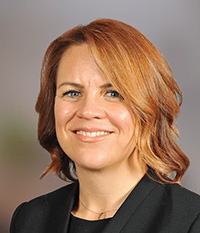 Rachel Roberts is the UK managing director at Stowe Family Law. Responsible for legal operations across the UK, Rachel leads a growing team of over 200 lawyers to ensure clients are provided with excellent service and legal advice. She specialises in all aspects of family law but has particular expertise in dealing with divorce finances after a marriage breakdown. Rachel’s experience in financial cases includes cases involving substantial income and capital, both in this country and abroad, as well as complex financial, business, and trust structures.