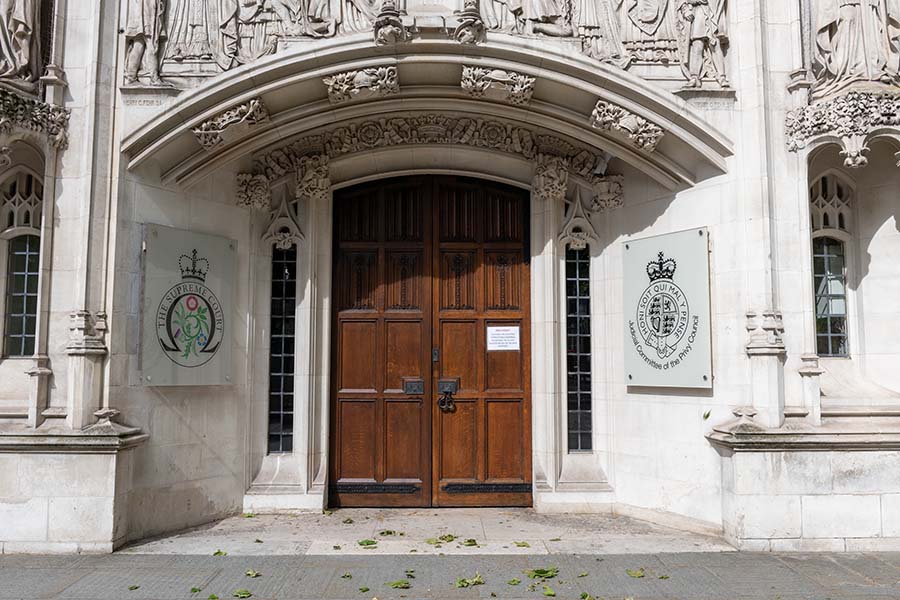
Helen Nettleship, barrister at 42BR Barristers, explores the impact of the Supreme Court’s decision in the case of X and Y on non-molestation orders.
When the Supreme Court handed down judgment in the matter of X and Y (Children: Adoption Order: Setting Aside) UKSC/2025/0039 on 22 April 2026, dismissing the appeal from the Court of Appeal, it confirmed that it has no jurisdiction to revoke a validly made adoption order. This outcome is unsurprising.
The facts of this case are that two sisters were adopted around the ages of five and six. Within 10 years the adoption had failed. The girls gravitated towards their birth mother and went on to live with her. Fresh care proceedings were brought on the basis of the girls being beyond parental control. One girl has now moved to live with her biological father. The girls are now adult women and have babies of their own.
Unusual case
The unusual element of this case is that the adoptive mother (who supported contact with the birth mother) brought the initial application to revoke the adoption order. She was not motivated by rejection but out of a laudable desire to honour the wishes and feelings of her Gillick-competent adoptive children. The application was refused and the appeal was supported by the girls and the birth mother. In turn the Court of Appeal dismissed the appeal.
The Supreme Court invited intervention from International Centre for Family Law, Policy and Practice, The Association of Lawyers for Children and Coram BAAF. These three organisations all echoed the Court of Appeal’s analysis: that the statutory regime makes no provision for the revocation of a properly made adoption order. In short, Parliament’s intention was that an adoption order is permanent and lifelong.
A legal fiction
Adoption is often characterised as a legal fiction: the adoptive parents become the legal parents; the natural parents become legally severed from the child; the child is ‘born again’ in its new family legally speaking. These days however, we don’t expect or encourage children to be immersed in their adoptive fiction. We undertake life story work, tell them the truth about their background, maybe allow contact if it’s safe and perhaps help them find their birth parents when they reach adulthood.
The modern reality is that many adopted people will seek out their birth family and establish relationships with them once they reach adulthood. Sadly, some adoptions will fail, for many reasons, resulting often in the child returning to the state care system. So why do we cleave to the fiction of the permanence of adoption?
In the case of these two girls, it is superficially attractive to want to revoke their adoption orders. Whilst still children, the girls had made their way back into the care and responsibility of their birth parents. Their legal and practical relationship with their adoptive mother but a remnant from a failed fictional experiment. It’s easy to have sympathy for their particular circumstances, as fiction and reality have long parted company.
The greater good
However good law is not made for outliers at the expense of greater good. This point is neatly expressed in paragraph 30 of the judgment:
There are strong public policy reasons for the “peculiar finality” of an adoption order once made, grounded in the nature and intended effect of an adoption order but also in the potential damage that would be done to the lifelong commitment of adopters to their adoptive children if there was a possibility of the child, or indeed the parents, subsequently challenging the validity of the order, and to the willingness and availability of prospective adopters if this possibility were to exist. These policy considerations militate against any measure which dilutes or undermines the finality and certainty of an adoption order.
An instructive part of the judgment is where it traces the 100 years of adoption law in this country. At no point has Parliament wished to provide for the revocation of adoption orders in any of the 1926, 1949, 1950, 1958, 1976 or current 2002 Acts governing adoption. The permanence and irrevocable nature of adoption is maintained throughout. It’s not an oversight.
Unanimous rejection
The Supreme Court roundly and unanimously rejected any argument that it could invoke its inherent jurisdiction to allow for revocation in the absence of Parliament legislating for it. The court further rejected the possibility of using parens patriae powers as there is no gap in the statutory powers for children in comparable circumstances to these girls. The court finally rejected any prospect of future cases requiring revocation including potential incompatibility with Convention Rights.
If there were any glimmer of a possibility that the door might not be shut, it is now clear the door is not just shut but hermetically sealed.
Plainly any remedy can only lie in campaigning for an amendment to the statutory regime. Those arguing to introduce a statutory possibility of revocation should have GK Chesterton’s Fence firmly in mind and consider the weighty reasons why, over the course of the last hundred years Parliament has clung to the principle that adoption is permanent and enduring by design.
X and Y (Children: Adoption Order: Setting Aside) judgment
About the author
 Helen Nettleship returned to Chambers in 2013, having previously completed her pupillage at 42BR Barristers under the supervision of Richard Furniss and Damian Woodward-Carlton. She has established a broad-based practice and accepts instructions in all key areas of Chambers’ work. Helen is regularly instructed in all aspects of family law: ancillary relief, public children, private children and domestic violence. FPC, County Court, High Court and Court of Appeal experience. She is a member of FLBA.