
Necessary reform of the “technical gaps” and “insufficient regulatory powers” around surrogacy and reproductive law may not be resolvable in one statute, according to Baroness Ruth Lynn Deech.
Addressing the House of Lords last week, the former chairwoman of the Human Fertilisation and Embryology Authority (HFEA)said: “The HFEA itself acknowledges that, while much of the 1990 [Human Fertilisation and Embryology] Act remains fit for purpose, it has been updated by statute only once, in 2008, and now contains significant technical gaps, outdated consent rules and insufficient regulatory powers. The HFEA has made proposals for modernisation.
“At the same time, the law governing surrogacy, the Surrogacy Arrangements Act 1985, was drafted for a world in which surrogacy was rare, poorly understood and feared.”
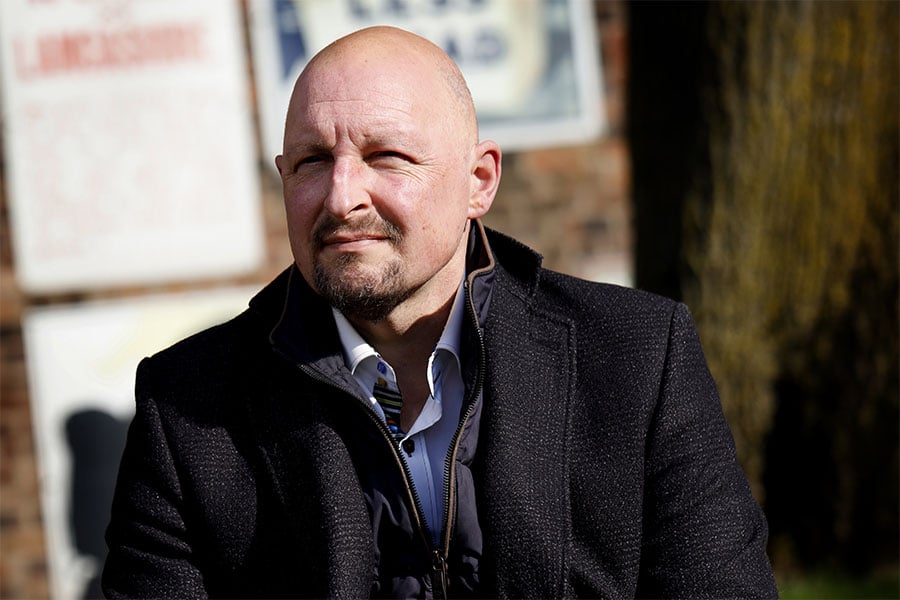
Baroness Deech (pictured) highlighted that “comprehensive reform of both areas is on the table”, with two reform proposals; the HFEA’s 2023 proposals to modernise the law, and the Law Commission’s 2023 recommendations for a new surrogacy framework.
She described the HFEA proposals as “an innovative, ethical, patient-centred system of reproductive law” but said The Law Commission’s proposals about surrogacy are “different”.
The Baroness continued: “As I have looked into this recently, I am less certain than I was that surrogacy and reproductive law can be resolved—certainly not in one statute. Parliament needs to take the lead in scrutiny.”
As technology and practice advances foresight is needed in regulation, Baroness Deech added, such as the keeping of embryos beyond the 14-day limit, stem cell-based embryo models and in vitro-derived gametes.
She explained: “The extension of the 14-day rule … is being reviewed by the Nuffield Council on Bioethics, which is consulting with the public. In vitro-derived gametes are created by reprogramming other cells—for example, skin. Under current law, they could be used for research but not reproduction.
“The advantages are that they would eliminate the need for gamete donation, but they will need separate definition in the HFE Act, fresh consideration of the definition of parenthood and, of course, much more research.”
Frameworks of regulation must deal with anticipated developments here and their ethics, she added.
“There are also stem cell-based embryo models, which are lab-grown models made from human stem cells that mimic early stages of human embryonic development. They may verge on becoming real human embryos, and the voluntary code of practice developed in Cambridge needs to be embedded, with a view to developing a distinct method of regulating them.”
Baroness Deech called on Parliament to modernise the Human Fertilisation and Embryology Act and to set up a Select Committee to examine the HFEA’s proposals to expand regulatory powers, simplify consent rules, modernise donor information provisions and create a flexible framework for future scientific developments
“A Select Committee also needs to look at the Law Commission’s surrogacy reforms as a second-order issue. As I said, I am not at all sure about integrating fertility and surrogacy law into a whole,” she said.
Image © House of Lords / photography by Roger Harris, reproduced under an Attribution 3.0 Unported (CC BY 3.0) licence