


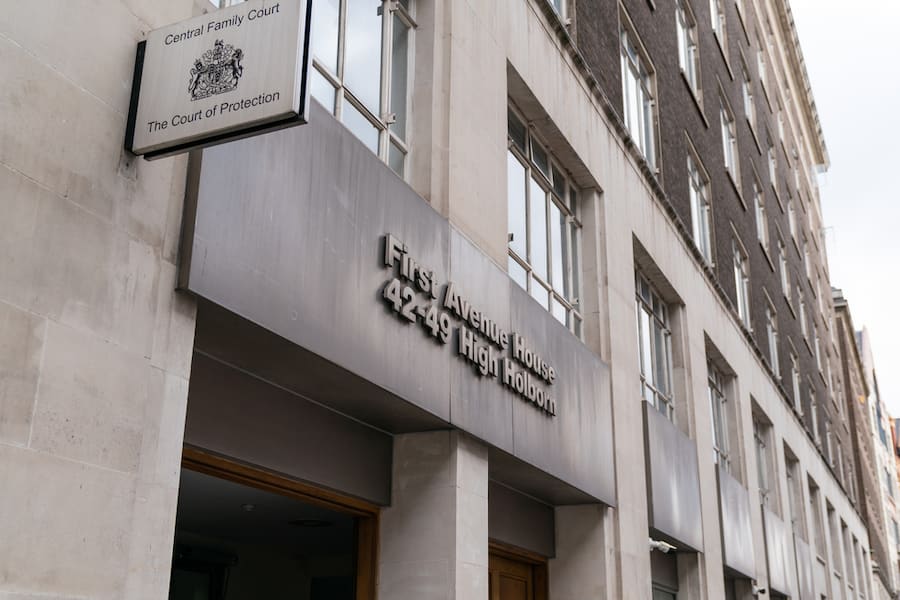
In a test case following plans to revoke the automatic right of parental involvement in family proceedings a judge has been asked to determine the future of a three and a half year old child whose mother was killed by her father,
In the case of Re A (A Child) (Mother killed by Father) [2025] EWFC 374 child A’s mother Kennedi Westcarr-Sabaroche, was killed by her father, Gogoa Lois Tape. The High Court, sitting at the Family Court in West London, was asked to determine whether a special guardianship order should be made in favour of A’s maternal grandmother, whether the father’s parental responsibility should be revoked, whether A’s surname should be changed, and whether any section 91(14) orders should be imposed to restrict future applications.
In a separate criminal case, Mr Tape was convicted of killing Kennedi Westcarr-Sabaroche at the age of 25, just weeks before A’s second birthday in April 2024.. The killing was described by HHJ Newbury at the Inner London Crown Court as “brutal” and catastrophic for the family. In September 2025, Mr Tape pleaded guilty to manslaughter on grounds of diminished responsibility. He was made subject to a hospital order with restrictions, with the sentencing judge observing that his detention would be “measured in years and possibly lifelong.” The sentencing remarks highlighted Kennedi’s qualities as a devoted mother and the devastating impact of her death on her family, noting that A is left motherless and burdened by the knowledge that her father killed her mother.
Seven days after the killing, Kennedi’s mother, Linda Westcarr, applied for an order for A to live with her and sought parental responsibility and a prohibited steps order to prevent removal by the paternal grandparents. The court granted these interim orders and scheduled a return hearing for mid April 2024, where A remained in Ms Westcarr’s care under an interim “lives with” order.
In June 2024, the paternal grandparents sought contact, which was refused, though they were permitted to pursue the application. The court directed a special guardianship assessment and a section 7 report. On 26 September 2024, the case was reallocated to the High Court due to its complexity. In November 2024, A was joined as a party, and a guardian was appointed. The paternal grandparents withdrew their application for special guardianship but continued to seek contact. Directions were given in April 2025 for the final hearing, which took place on in October 2025, with judgment handed down on 3rd November 2025.
In the High Court’s decision HHJ Willans granted special guardianship to maternal grandparent Ms Westcarr, praising her ‘excellent job’ in caring for A and noting that permanence and stability were essential. The judge ordered a change of surname, removing ‘Tape’ and adding ‘Kennedi’ to honour A’s mother, reasoning that retaining the father’s name would cause ‘profound negative impact’ and emotional harm. The father’s parental responsibility was revoked, as the judge found it inconceivable that such responsibility would be granted now, given the father’s actions and indefinite detention. A section 91(14) order was imposed against the father until A’s 18th birthday and against the paternal grandparents until her 12th birthday, to protect the family from harmful or ill-judged applications. Indirect contact with paternal grandparents was limited to two letters per year.
The judgment emphasised that these decisions were rooted in A’s welfare as the paramount consideration under the Children Act 1989, particularly in light of domestic abuse principles under PD12J and the Domestic Abuse Act 2021.
The case brings into sharp focus the latest discussions on the presumption of parental involvement, with cases involving domestic abuse or homicide cited as examples where courts may decide it is not in the best interests of the child for a parent to be involved. In the decision, HHJ Willans’ reasoning reflects this trend, prioritising emotional safety and stability over maintaining parental ties where they pose harm.















One Response
If it is only going apply to cases such as this which shouldn’t need the new legislation to determine such findings then it will help only the minority.