
East London Family Court has determined a post-adoption contact order is necessary to facilitate and safeguard meaningful sibling contact, following “substantial and dogged resistance within the local authority to promoting and advocating for such contact”.
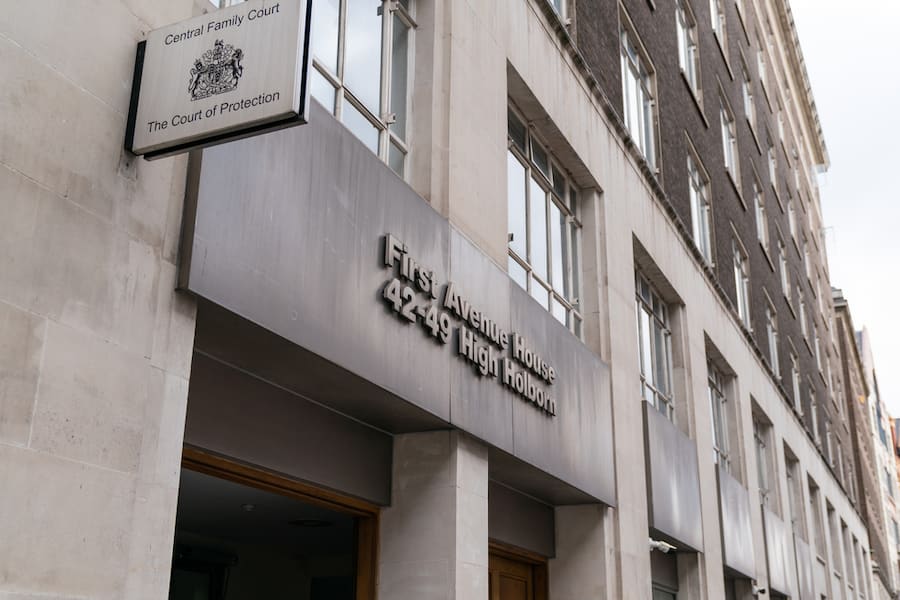
Her Honour Judge Reardon made the order for contact between two sets of adopted siblings under s.51 Adoption and Children Act 2002 in November last year, after finding the approach of the London Borough of Waltham Forest (pictured) in relation to post-adoption contact had been “confused and inconsistent”.
The children are the eldest four of six siblings, and were removed from their parents’ care in 2022. At the time, the eldest was five years old, and all were non-verbal and showing signs of neglect. No practical solution was available for keeping the children together, so they were placed in two unrelated placements, with contact between them taking place twice a week. In 2023, their mother (BM) gave birth to a further two children, twins, who remain with her and their father (BF).
C and D live with adoptive parents A1 and A2; E and F live with adoptive parents A3 and A4. The two families are not known to each other.
In March 2024, Her Honour Judge Probyn made final care and placement orders in respect of the four eldest children. Part of that order was made under s.26 of the ACA 2002, requiring the local authority to ensure that regular sibling contact between C D E and F must occur no less than twice per year. No such order was made in respect of contact between the elder siblings and either their birth parents or twin siblings, although it was noted that it was hoped this would happen.
The birth parents applied for permission to oppose both adoptions, which was refused by HHJ Reardon in a hearing on 9 October. In the November hearing, she noted:
“In advance of the hearing on 9 October 2025 the local authority was directed to file, in each set of proceedings, a witness statement setting out, amongst other matters, an explanation of the steps it had taken in relation to the children’s contact with their parents and siblings since the final hearing before HHJ Probyn. A statement was filed by the respective social workers in each set of adoption proceedings.
“In neither statement is there any acknowledgement by the author of the local authority’s non-compliance with the s26 order, still less an explanation for it, or any account of attempts made by the local authority to support the two prospective adoptive families in arranging the contact which had been ordered…
“Following the hearing on 9 October 2025 I directed the local authority to file, within each application, a plan for sibling contact. My intention was that the local authority would set out in each plan the practical steps it intended to take to support the sibling relationships in future.”
Noting that the document filed by the local authority had been prepared using a generic template, HHJ Reardon continued:
“I had said in my judgment that what was required was a document which set out the steps the local authority was going to take to support contact, with sufficient detail to satisfy the court that the contact was likely to take place. The plans filed by the local authority do not come close to meeting that requirement…
“Overall, the local authority’s approach to the issue of post-adoption contact has been confused and inconsistent. The impression given is that the local authority has paid lip-service at various points in the care and adoption proceedings to the benefits of future direct contact between the children and their birth relatives, but that there is, in reality, substantial and dogged resistance within the local authority to promoting and advocating for such contact.
“I remain of the view, on balance and for the reasons given in my judgment on 9 October 2025, that there should not be a s51A order for direct contact between the children and their parents, but find it difficult to feel confident that the local authority is genuinely committed to keeping this issue meaningfully under review. I hope I am wrong.”
The sole disputed issue at the November hearing was therefore whether orders should be made under s51A of the ACA 2002 requiring each set of adopters to make the children available for contact with their separately placed siblings.
The application for post-adoption contact orders was brought by the birth parents, with the support of the children’s guardian. They sought orders for direct sibling contact at least twice yearly.
The adoptive parents did not oppose sibling contact in principle but, together with the local authority, resisted the making of a formal order on the basis that this would reduce flexibility and could undermine the developing adoptive placements.
HHJ Reardon considered the fact that she had no power to compel the local authority to facilitate contact post-adoption, and that the birth parents were unlikely to be able to enforce the order.
Nonetheless, she considered that it was appropriate to make an order, saying:
“I am not, in fact, imposing an order for contact arrangements with which the adopters do not agree. I acknowledge that an order removes some flexibility but at this level (two contacts a year) I would hope that any inconvenience, or impact on family life, is minimal. In any event, the intention behind the order, for the reasons I have explained, is not to fetter the adoptive parents but to support them.”
A post-script to the written judgment referred to an email one set of adoptive parents wrote to the court setting out the “serious problems” they had experienced in obtaining support from the local authority for their adopted children. They had made two formal complaints, both of which were upheld.
“They say that they were not told that a s26 contact order was in place until halfway through the introductions process, and that they then raised the issue of contact ‘countless’ times, but no steps were taken to support them with it until very late in the process,” HHJ Reardon noted.
The adoptive parents concluded in their email:
“We feel that we have made every effort to do the right thing at every step of this process. It has been made much more stressful and frustrating by the local authority. It is therefore disheartening that we may be made subject to a court order due to their actions and not our own.”
C & Ors (ACA s51A: contact order after adoption) [2025] EWFC 436 (B)