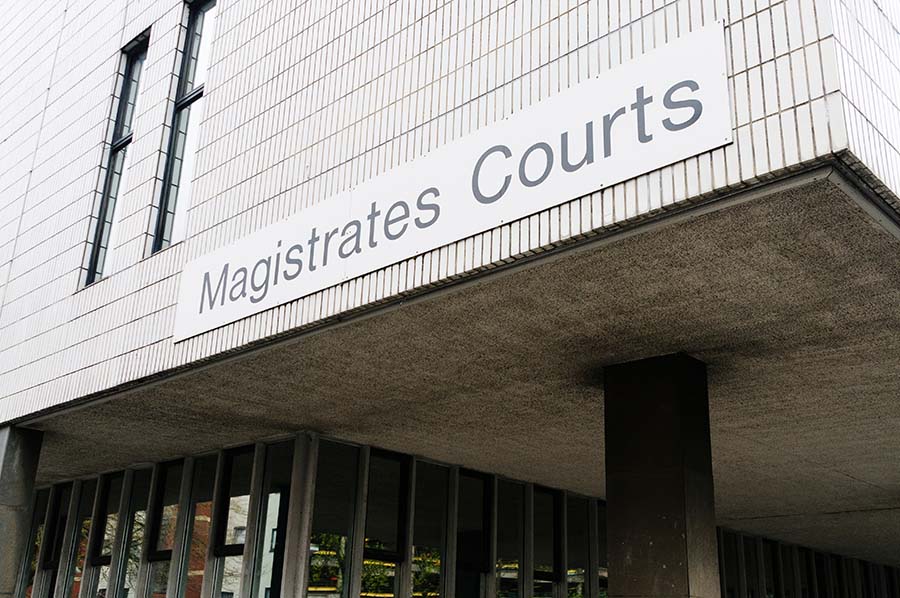

A new initiative aims to reduce delays of court proceedings for domestic abuse cases and provide better clarity for victims through early preparation and “robust” case management.
Guidance on the newly announced Domestic Abuse Listing Scheme has been released by the Judiciary of England and Wales, stating that collaboration of all bodies across the Criminal Justice System will be a key factor in the success of it.
The Scheme will apply to “suitable” domestic abuse cases involving a single defendant.
Restrictions on defendants depend upon the court handling the case, with magistrates’ courts allowing defendants to be eligible to attend whether they are on bail or in custody and no stringent length on trials for a case.
Meanwhile when reviewing defendants in a domestic abuse case that will be heard at a crown court, defendants must be on bail and with an anticipated trial length of no more than three days, excluding jury retirement.
Relevant offences accepted by the scheme may include violence, controlling or coercive behaviour, breaches of protective orders, harassment and stalking, public order offences, criminal damage, specified financial or other domestic abuse-related offending, and certain forms of image-based abuse.
Sexual offences and cases with multiple defendants will be excluded from the scheme.
Cases can be removed and added and must continually be reviewed throughout court proceedings, the guidance states.
Early identification of suitable domestic abuse cases for the initiative will be crucial to its success and part of this responsibility will lie on the police and Crown Prosecution Service (CPS) to marker these cases accurately in the early stages of charges and allocations of lawyers.
Once a case has been accepted within the scheme, in a magistrates’ court, the first hearing must address case management issues and the court should aim to list trials within eight to 12 weeks from that hearing date, the guidance confirmed.
In a crown court, a Plea and Trial Preparation Hearing (PTPH) should be scheduled within four weeks of the case being sent and the court should identify any issues, allocate the appropriate Priority Tier, determine whether the trial should have a fixed or flexible date, and consider whether judicial continuity, early reservation or a pre-trial review would assist.
The CPS must then serve the indictment and the balance of its case seven days before the PTPH, and any crown court trial should be concluded within 12 to 14 weeks of the PTPH.
The guidance emphasised the importance of victim safety throughout court proceedings, citing it is “fundamental” to the Scheme.
A defendant’s bail or custody status, any bail conditions where applicable, and other protective measures must be considered at “every relevant stage”, the guidance notes, and the Police and CPS should keep victims informed, monitor engagement and identify support needs, including the need for specialist services.
The guidance also highlighted that victim personal statements should be voluntary and addressed “sensitively and responsively”.