
An aristocrat is engaged in a complex High Court battle to prevent trustees of his ex-wife’s £1.2 million income fund from selling a cottage on his family’s 11th century rural estate in Somerset.
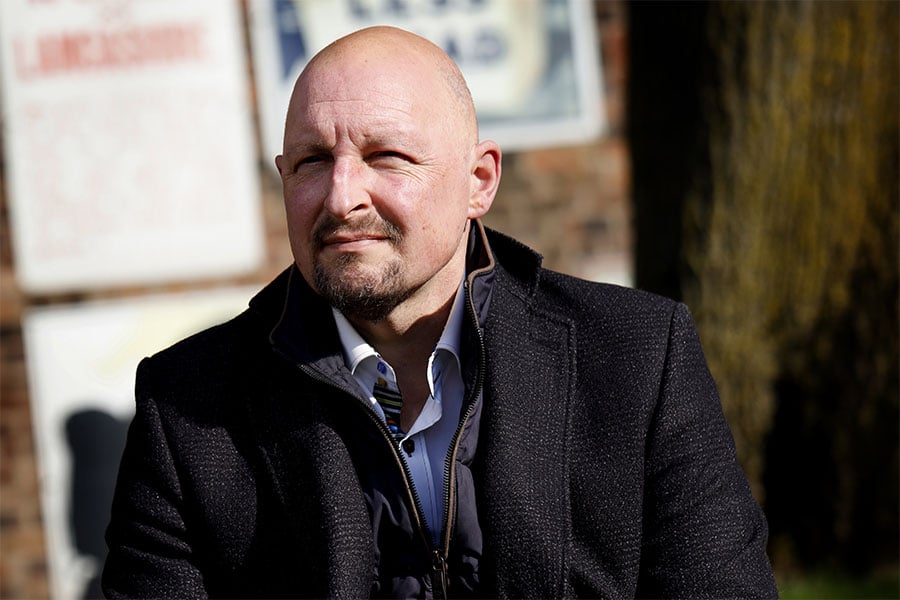
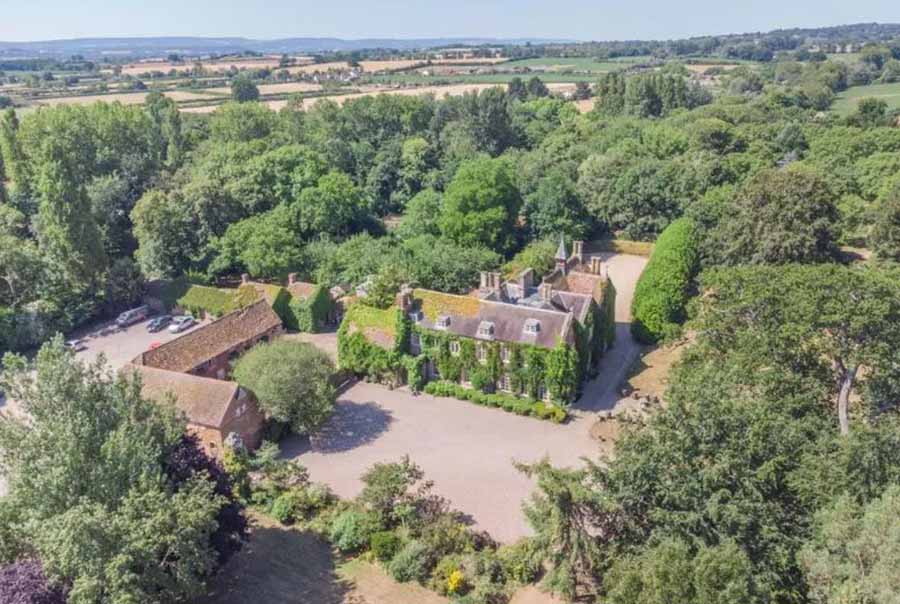
Sir Benjamin Slade, 7th Baronet of Maunsel, was married to Lady Pauline Slade for 12 years before their divorce in 1994. As part of the divorce, Lady Slade was made beneficiary of an income fund now worth around £651,000, plus a £585,000 house on his 2,000 acre estate in rural Somerset (pictured).
However, Lady Slade has now left the property and wants it to be sold by trustees to pay her debts and boost her income, sparking a complex legal battle over the future of the house, where Sir Benjamin, the 79-year-old descendent of one of the Duke of Wellington’s generals, is currently living.
He is fighting to prevent the sale in the High Court, with his lawyers insisting that his ex has no right to the proceeds of the house, Old Farm, Lower Rydon, West Newton, since she only ever had a right to live there rent-free for life.
The trustees of Lady Slade’s fund are asking a judge to decide whether she can force them to sell, and if so what the money can be used for.
Sir Benjamin was in court for the short hearing, during which High Court judge, Master Julia Clark, was asked to resolve the “preliminary issue” of whether Lady Slade can “compel” the trustees to sell the Old Farm and “invest the proceeds to produce an income for her”.
The two trustees were represented in court by barrister, Hugh Cumber, who stressed their “neutral” stance amid “diametrically opposing views”.
Lady Slade is a named party in the case but was not represented in court, with the trustees’ barrister telling the judge she has not participated in the court case or filed evidence, “despite her interest in the outcome of the proceedings”.
He added:
“(The trustees) have brought these proceedings in an attempt to resolve the dispute and ensure the proper administration of the trust.”
The baronet’s family seat is a 13-bedroom red-brick manor with origins stretching back to the 11th century and is said to be where Geoffrey Chaucer wrote some of his works.
When Sir Benjamin’ and Lady Pauline divorced in 1994, he settled a trust to provide her with an income, while transferring the Old Farm into it for her to use as a home.
But the baronet’s barrister, Robert Deacon, told the court that Lady Slade moved out in 2022 or 2023, later penning a letter in August 2024 “confirming that she had no intention of living in the property again”.
Lady Slade went on to say that she had no wish to buy a “replacement property”, but simply wanted the Old Farm to be sold up for her benefit.
“She wanted the sale proceeds invested to enhance her income and she wanted all her debts paid from the sale proceeds,” continued Mr Deacon.
That decision has now led to the hearing in the High Court, with Sir Benjamin insisting his former wife has no right to any money from the house, since it was only ever transferred to provide her with a home.
His barrister said the aim of the 1994 settlement was “to provide income for Lady Slade from the cash fund deposited in the trust and to provide her with lifetime rent-free accommodation by means of the transfer of the property to the trust”.
He argued:
“It was never objectively intended that the property would be used to provide income either to Lady Slade or at all.
“She is not entitled under the deed to alter the underlying purpose of the trust and the nature of the trust property from a home to an income-producing asset.”
Lady Slade has limited rights in relation to both her investment fund and the Old Farm, argued Mr Deacon, noting that she has no power to manage her £651,000 trust fund.
“Under the settlement, she has a life interest in income, but is not entitled to control the capital of the trust fund.
“As regards the property, she has only a limited power, which is to direct the trustees to sell the property, but only to acquire another property [to be her home].
“That does not allow her to demand investment of the proceeds for income.”
Sir Benjamin also claims that, under the terms of the divorce settlement, Lady Pauline cannot request the Old Farm’s sale unless she is living at the property, and argued that the purpose of the trust was solely to safeguard her permanent accommodation.
“The trust is there to permit her to live there as long as she lives,” he told the court.
“A more fundamental point is that the property was transferred solely to provide a place for her to live rent free.”
Denise Findlay is partner in the family team at Birketts LLP. She said: “This case is a reminder that divorce settlements reached many years ago can still give rise to disputes, particularly where trusts and property rights are involved. A right to occupy a property for life is legally very different from outright ownership or an entitlement to the sale proceeds, and the court will be slow to rewrite arrangements that were clearly intended to be final.
“Referring to this as ‘her’ trust fund risks blurring an important legal distinction. Being a beneficiary of a trust is not the same as owning the underlying assets. If the original divorce settlement granted only a lifetime right to live in the property, the court is unlikely to treat that as an entitlement to force a sale and access the proceeds.
“Much will depend on the precise wording of the original settlement and trust documentation, but the case underlines the importance of careful drafting in financial orders on divorce, so that intentions are clear and costly disputes decades later can be avoided.”
Master Clark reserved her decision on whether Lady Slade can force the trustees to sell the house and invest the proceeds to boost her income until a later date.