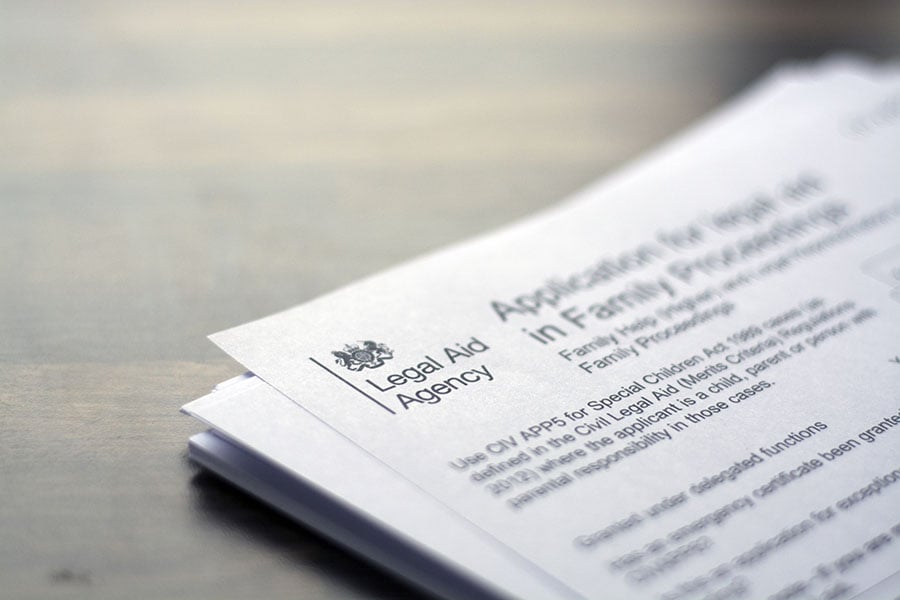

The first working Monday of the year has been dubbed ‘divorce day’, due to a supposed influx of couples seeking legal help to end their marriages.
But much like the thoroughly debunked Blue Monday, which continues to receive mainstream coverage two decades after a PR company came up with the concept to sell holidays, family lawyers say divorce day is nothing more than media hype with little basis in fact.
“Our data reinforces the view that divorce day is a myth,” says Christopher Finch, partner in the family team at HCR Law.
“While January can feel busy because December is traditionally quieter, there is no sudden surge on one particular day that justifies the label ‘divorce day’.”
According to HCR Law’s family team of 37 specialist solicitors across 11 offices, there is no evidence to support the idea of a single day when divorce enquiries peak. Reviewing divorce enquiries across the team over the past two years, the firm found that its busiest months for divorce and separation enquiries were April and September in 2025, and February and March the year before.
“The persistence of the myth is often linked to the pressures of the festive period,” Finch added.
“Christmas and New Year can heighten existing tensions in already fragile relationships, and law firms may notice an increase in enquiries once offices reopen. However, this is more likely to reflect pent-up demand rather than impulsive decisions made over the holiday period.”
Josie Kirk, associate solicitor in the family team at London and Leeds firm Blacks Solicitors, agrees.
“Although January is typically a busy time for new divorce enquiries, it is very unlikely that the start of the new year has led any couple to make a sudden decision to divorce,” she said.
“This is a difficult and emotional decision that takes time, thought, and consideration. Couples are likely to obtain advice before commencing divorce proceedings, taking time to reflect on their personal and financial circumstances, and the future arrangements for any children of the family.
“The idea of a specific ‘divorce day’ is therefore a flawed one, which oversimplifies a complicated and very personal process, and does not reflect the reality of how most couples make the decision to end their marriage.”
Sarah Jane Boon, partner in the law team at Charles Russell Speechlys, says the concept of ‘divorce day’ overlooks the reality for most couples. “Separation isn’t sparked by a single festive row,” she said.
“It’s usually the result of months, if not years, of emotional and financial strain.
“Whilst divorce rates are falling, this isn’t necessarily a sign of stronger marriages. More couples are choosing to cohabit, but many simply can’t afford to separate. Rising living costs, frozen property markets and higher mortgage rates have left thousands stuck in limbo, unable to move on.
“November’s budget has only made things harder. The mansion tax, changes to pension rules and frozen tax thresholds are adding cost, delay and complexity to an already painful process.”
“Decisions about separation are rarely sudden,” Finch concluded.
“For parents, in particular, timing is often influenced by children’s needs, school terms, exams and wider financial considerations. Many people think carefully about when and how to take the next step.
“There simply is no such thing as ‘divorce day’. For every couple, the right time will depend on their unique circumstances.”