
Dr Michael Wells-Greco and Hannah Owen from Charles Russell Speechlys ask whether the Supreme Court will overturn the Court of Appeal’s ruling that adoption orders can’t be set aside, and examine the questions that arise from the “deeply sad and unusual” case.
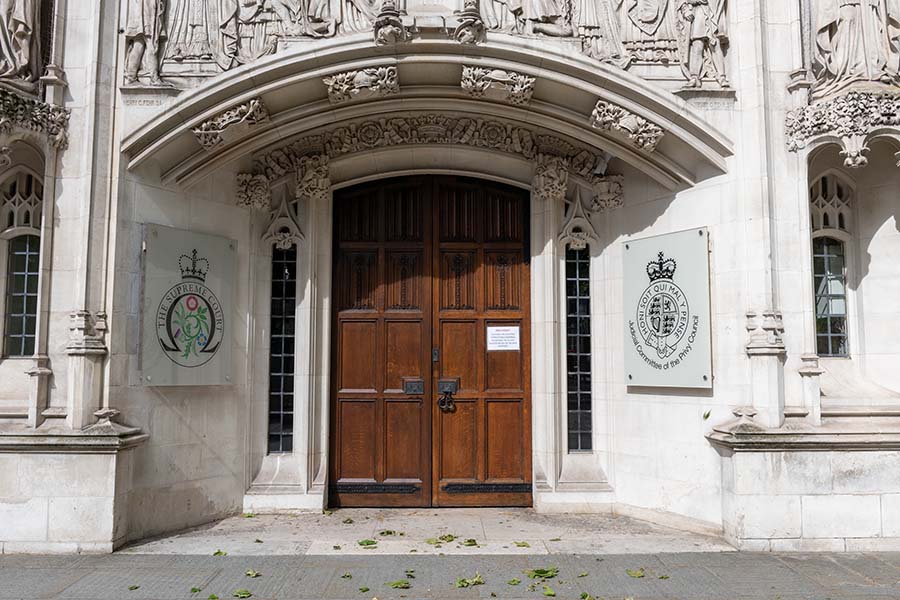
The UK Supreme Court sat on 4 and 5 February 2026 to hear the case of X and Y (Children: Adoption Order: Setting Aside) UKSC/2025/0039, a case that goes to the heart of what adoption means in English law.
The issue central to this case is plain: Can an adoption order be set aside on welfare grounds using the High Court’s inherent jurisdiction?
In November 2024, the Court of Appeal answered that question with a firm “no”.
It was clear in its reasoning, stating that adoption orders are ”transformative, have a peculiar finality and are intended to be irreversible, lasting throughout life, as if the child had been born to the adopter. That high degree of permanence, from which the benefits to the child of long-term security and stability should flow, is the unique feature that marks adoption out from all other orders made for children; it is, at its core, what adoption is all about.”
Unlike other orders made under the Children Act 1989, adoption does not merely regulate parental responsibility; it replaces it.
Parliament created a detailed statutory scheme governing adoption. It did not provide a power to revoke an adoption order on welfare grounds. The Court of Appeal held that the High Court cannot use its inherent jurisdiction to circumvent that deliberate legislative choice.
In order to clearly understand the outcome of the case, we need to examine the adoption process in more detail.
The practical process
Adoption under the Adoption and Children Act 2002 follows a deliberately rigorous statutory process. Where a child is subject to a Placement Order or placed with parental consent, the local authority undertakes family finding. Prospective adopters – whether a couple or single applicant over 21 – undergo detailed assessment, culminating in a Prospective Adopters Report and scrutiny by an adoption panel. Once matched, the child must live with the adopters for at least 10 weeks before an application can be made.
Adoption is therefore a commitment. It goes to a person’s sense of belonging and forms part of their identity.
When permanence collides with reality
Now considering the case before the Supreme Court, the case of X and Y arises from deeply sad and unusual facts.
X and Y were placed for adoption in 2012 with AM. Prior to placement, they had spent time in foster care and maintained significant contact with their birth mother, BM. The children did not settle with AM and continued to spend extended periods with BM, including a period during which BM moved into AM’s home to escape an abusive relationship.
By August 2021, the children had left AM’s home entirely and were living with BM. Care proceedings were issued in February 2023. In April 2023, an application by AM was lodged seeking revocation of the adoption orders.
It is understood that both children supported the application to be “un-adopted.
The case therefore does not concern fraud, procedural irregularity, or lack of consent at the time the orders were made. It concerns a breakdown in the adoptive placement years later, and whether welfare considerations alone can justify undoing the legal transformation.
Next steps
We will have to wait to see whether the Supreme Court will uphold the Court of Appeal’s decision. If the Supreme Court does, a few questions arise.
Historically, adoption orders have been appealed out of time in rare circumstances – for example, where biological parents were not properly notified or where consent was fundamentally flawed (see Re F (R) (An Infant) [1970] and Re M (Minors) (Adoption) [1991]).
Nevertheless, those cases involved defects at the time the order was made. In Re B (Adoption: Jurisdiction to Set Aside) [1995], the court refused to entertain an appeal some 35 years later.
However, if the Supreme Court overturns the decision of the Court of Appeal and considers that there is a power to revoke adoption orders, does that open a door to allowing the possibility of ‘difficult children’ being ‘un-adopted’? And what of the effect of a revocation of an adoption which has, for example, been recognised abroad (ie for citizenship acquisition purposes)? Will the legal effects of those adoptions be undone?
The case also raises broader systemic concerns. Placement breakdown more than a decade after adoption inevitably prompts reflection on the adequacy of post-adoption support.
A defining moment for adoption law
Adoption is designed to provide children with permanence, belonging and identity. Its transformative nature is what distinguishes it from all other orders in family law.
The Supreme Court must now decide whether that permanence is truly irrevocable, or whether, in the most exceptional cases, the law must accommodate reality.
Whatever the outcome, X and Y is likely to become a defining authority on the limits of the inherent jurisdiction and the meaning of finality in adoption.
About the authors
 Dr Michael Wells-Greco has an international reputation in the field of children work and family law. He has a particular expertise in international children cases including Hague Convention matters, cross border adoption, surrogacy and all aspects of the movement of children. Michael advises on cross-border family work including nuptial agreements, financial claims and succession matters. Michael works between Geneva and London and has particular expertise in Anglo-Swiss and in Italy interested matters. Michael is a former Assistant Professor researching and teaching private international law and international family law subject matters at Royal Holloway, University of London and is a former consultant lawyer to the Permanent Bureau of the Hague Conference on Private International Law. He is a fellow of the International Academy of Family Lawyers.
 Hannah Owen has experience covering all aspects of family law and has gained particular experience in advising on complex private law children issues, international surrogacy arrangements, nuptial agreements, financial settlements on divorce and dissolution and Schedule 1 proceedings. She has extensive experience advising on private law children issues, including child arrangements and complex leave to remove applications. Hannah often advises on matters where there are international elements. She also has a particular interest in advising on matters where there are domestic and international pension arrangements.