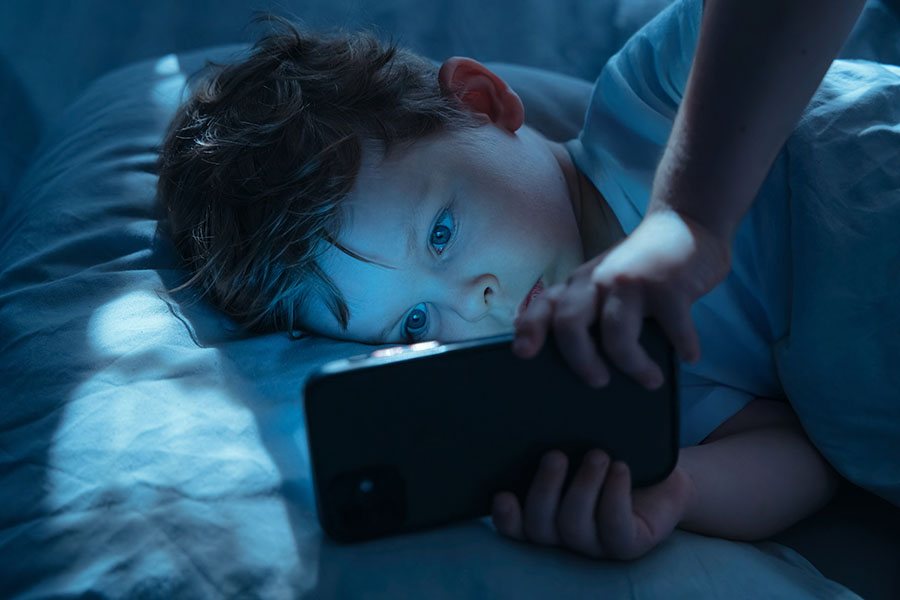

The government has launched a consultation on social media use by children, with the options being explored including an outright ban. Baljinder Bath, family law barrister at 4PB, explores what this could mean for the digital rights of children, and explains why legislation may fail to protect families.
Once hailed as the ultimate tool for connection, social media is now being treated by global regulators as a public health crisis. As the UK watches Australia’s radical age-prohibition experiment, the fundamental question is are we legislating out of evidence, or out of impulse?
On 10 December 2025, Australia became the first country in the world to enforce a nationwide prohibition preventing children under the age of 16 from holding accounts on major social media platforms. The Online Safety Amendment (Social Media Minimum Age) Act 2024 requires 10 mandated social media platforms to take reasonable steps to prevent children who have not reached the age of 16 from having accounts. Failing to verify age restrictions, can result in large fines for the tech companies.
Age verification can be authenticated in three ways. The first is age inference, whereby the platform may determine age from the data it already holds, including images and content that has been uploaded by the user. The second is age estimation, where the platform uses biometric information, including facial scanning. The third is by uploading official government identity documents, including passports and driving licenses. The price of entry for a teenager may soon be a digital fingerprint or a government-mandated facial scan, raising profound privacy concerns under existing GDPR frameworks of data minimisation. Indeed, forcing children to trade biometric data for digital access may address a safety crisis while inadvertently triggering a privacy one.
There has been a rush by other countries to follow suit. In late December 2025, France submitted a draft bill containing two measures; namely a ban on social media for under 15s and a ban on mobile phones in high schools. More recently, in January 2026, the UK government announced a consultation on whether social media should be banned in the UK, which they will respond to this summer.
Digital rights
The UK already has the benefit of the Online Safety Act 2023. This act provides that online platforms must take robust steps to protect children from harmful content, including material that promotes bullying, abuse, sexual exploitation, self-harm and suicide. This includes age verification by sites offering adult content and illegal content removal. OFCOM is responsible for ensuring compliance with the act and has the power to impose fines against platforms and block access to services that fail to comply.
In answer to a Freedom of Information request in October 2025, OFCOM said it had launched several investigations and issued a £20,000 fixed penalty and £100 daily penalty for the online message board 4Chan. Accordingly, is there a need for the UK government to go further, including an outright ban, or is it simply following the herd?
In addressing this question, a starting point is the digital rights of children. Children are not merely passive recipients of digital risk; their rights are enshrined in the UN Convention on the Rights of the Child. Children have the right to access information, express themselves, participate in digital culture, develop digital literacy, enjoy online play, and be heard in decisions that affect their digital lives. Any restriction must be lawful, necessary, and proportionate, and a blanket ban tests those boundaries.
Challenges to legislation
Australia has already seen its first lawsuit challenging its legislation. Two teenagers, Noah Jones and Macy Neyland, backed by the Digital Freedom Project, have issued proceedings against the federal government, arguing that the ban is unconstitutional because it interferes with free political communication. The Digital Freedom Project’s website accepts the law’s purpose of protecting young people’s wellbeing is legitimate, but asserts that it fails on proportionality because less restrictive and workable alternatives exist.
The organisation suggests alternatives of parental consent pathways for 14 and 15 year olds; duty of care and safe design settings from the platform; targeted moderation or takedown; age-appropriate feature gating rather than bans; digital literacy programs, and privacy preserving age assurance.
A second element to consider the definition of social media for the purposes of the legislation. In the Australian case, YouTube now faces restriction but Roblox, which is commonly used by children and is the subject of significant concerns, is not. The reality is children will turn to other social media platforms which may be unregulated or outside of the Australian jurisdiction.
Young people will not disappear from digital life simply because legislation tells them to. They are technologically sophisticated and will fake their age and identity documents and use VPNs to hide their location. If children do refrain from accessing the mandated platforms, will they turn to other more harmful alternatives? There is growing research that AI chatbots can be addictive, cause difficulties with attachment, and lead to self-harming behaviour and AI psychosis. Yet the Australian legislation does not mandate platforms such as Open AI or the companion chat bot apps.
Avoiding the issue
Whatever platforms children choose to engage with, what happens when something goes wrong? There is a real risk that some children will simply avoid seeking help fearing disclosure of prohibited online activity. Indeed, there are real world examples of children committing suicide following online sextortion, rather than turning to a family member or professional for help.
By simply banning the platforms, the legislation fails to address the harmful design features that underpin these platforms. As Sonia Livingstone states: “a ban leaves the exploitative algorithmic and data practices, and the ‘move fast and break things’ business model of the big platforms untouched”.
A better approach may be a requirement for safety features that force the tech companies to make social media safe for everyone. In Australia the campaign Fix Our Feeds calls for the government to intervene and require social media platforms to offer an opt-in to the algorithm, giving users the autonomy to turn algorithms on or off.
A blanket ban promotes a cliff edge whereby children can activate or reactivate social media accounts upon attaining the age of 16. They will then suddenly be exposed to the online social media world without the scaffolding of early literacy, resilience or supervised learning.
A nuanced approach
Will tech companies cooperate in paying any fines that are imposed against them? The big seven tech companies are based in the USA and are more powerful than most countries. In August 2025, the U.S. Federal Trade Commission warned that requiring domestic technology companies to comply with existing EU and UK regulations (even before the recent call for social media bans) could amount to “censoring Americans to comply with a foreign power’s laws,” which may be considered a violation of the law that prohibits unfair or deceptive practices in commerce.
As a notable example, 4Chan has challenged the notice and fine issued by OFCOM in the Federal Court of Washington DC, arguing OFCOM has no authority to impose or enforce unconstitutional UK laws on American soil.
The UK government consultation is a much needed and welcome call to arms to address social media harm. However, in my opinion a blanket ban is a blunt instrument.
Instead, there is a real need for a much more nuanced debate focusing on:
- For technology companies, mandatory requirements for them to address their predatory algorithms, which are a deliberate design choice. It is high time for them to have a new approach of ‘slow down and fix things’ with safety at the forefront.
- For children, media literacy across all levels of formal education focusing on online safety, hoaxes, misinformation, data protection, consent, privacy rights and the impact of the internet on emotional wellbeing education.
- For adults, a public health campaign about online harm and how parents can protect their children.
Public health crises require intervention, but sound policy requires patience and an evidence-based approach. Instead of following the international herd toward a total ban that may prove unenforceable and legally fraught, the UK government should enhance and improve the safety framework intended by the Online Safety Act 2023.
Protection from harm needs to be balanced against the cost of digital exclusion.
About the author
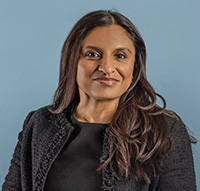 Baljinder Bath is family law barrister and experienced children’s law specialist with a strong reputation for handling complex and high-profile cases. She regularly appears against King’s Counsel and is known for her tenacity, precision, and ability to stand her ground in court. Her work spans representation of parents, children and local authorities in complex proceedings, with a consistent emphasis on securing outcomes that uphold the legal and welfare rights of children. She has particular expertise in cases involving non-accidental injuries, including child fatalities, sexual abuse, and fabricated or induced illness and perplexing presentation behaviour. Her work often involves detailed cross-examination of expert witnesses on complex medical issues.