Legal teams had to piece together photographs, medical records, bank statements and police evidence in a highly unusual High Court fact-finding hearing which became a “forensic investigation” to establish whether children at the centre of proceedings actually existed.
A judgment on John v Jane [2026] EWHC 415 (Fam) was handed down in private on 26th February 2026, but published last week. The anonymised judgment refers to the applicant as “John” and the respondent as “Jane”. The hearing concerned the existence of two children, referred to by the names “Shiloh” and “Aryeh”, who were thought to be aged one and two years old.
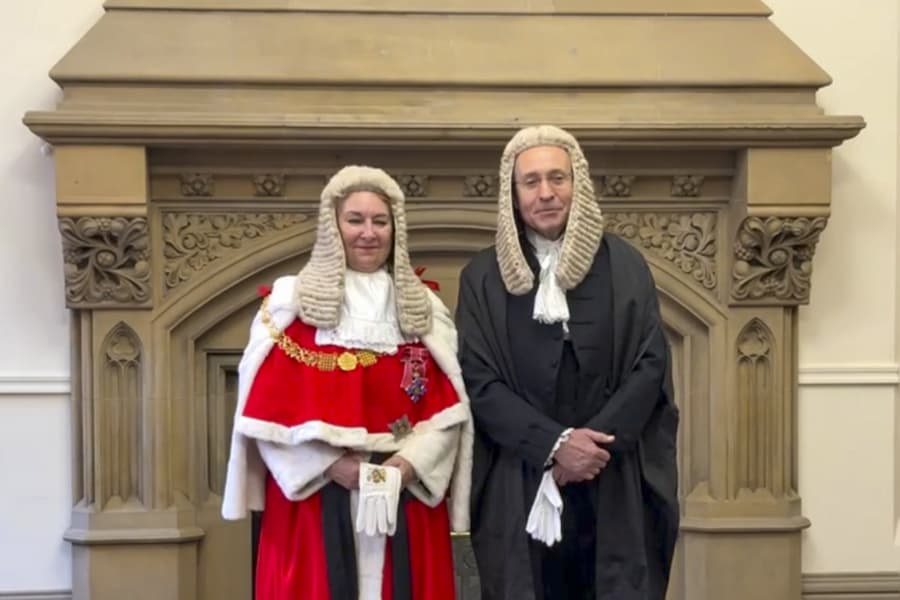
The Honourable Mrs Justice Judd found that “it is more likely that the respondent fabricated the pregnancies and the children than that she genuinely gave birth”.
The applicant, John, is in his mid-thirties and the respondent, his former partner, is in her early fifties. They met about five years ago and never lived together. In late 2022, Jane told John she was pregnant. She sent him an ultrasound image of the pregnancy in January 2023, and that she became visibly pregnant as time went on, with a due date in May 2023.
In early May 2023, the couple had an argument at Jane’s home and she called the police, making allegations of assault. John was arrested and imprisoned on remand for several months.
Two days after John was arrested, Jane sent a message which said, ‘She’s here everybody! Shiloh Rose 5lb 9oz 1.44am [May 2023].’
Various evidence of the child’s existence was sent to the applicant, including several photos and messages suggesting she was being cared for by relatives or the local authority.
After John was released from prison the relationship resumed, but he didn’t meet the baby. He said Jane said that the local authority had said he was not permitted to see Shiloh. In the meantime, Jane told John that she was pregnant again, and the baby was due in August 2024.
In early August 2024, there was an argument between John and Jane at her home. The applicant’s mother came to pick him up and says she saw that Jane was visibly pregnant.
Later in August 2024, Jane sent a message to John’s mother, saying she’d had a boy named ‘Aryeh’. She sent photos to John and his mother.
Jane subsequently reported John to the police, saying he had tried to break into her house. He was arrested and subjected to bail conditions until the charges were dropped in October 2024.
John regularly sent money to Jane for herself and the children, although he says she told him at some point in August 2024 that she had sold the children for £500.
She continued to send messages and photos to John, his mother, and others, about the children, including that they were with her niece.
John became very concerned about what had happened to the children and made enquiries with both the local authority and the police. He made an application to the court in October 2024 to ascertain the whereabouts of the children and for parental responsibility.
The respondent applied for a non-molestation order alleging verbal, physical and sexual abuse.
Through her counsel, Jane informed the judge that she and the applicant did not have any children together. She said she had been pregnant twice but miscarried on each occasion.
John did not accept that no children existed, particularly because he and his mother were convinced that they had seen the respondent to be visibly pregnant.
The respondent’s medical records were obtained and it was established that there were no records for the children with the local authority or the police.
The High Court examined a large bundle of evidence, including statements, mobile phone and health records.
In her judgment, Mrs Justice Judd writes: “This is the most extraordinary case… In many, if not most, cases where there has been continuing deceit and obstruction on the scale that has happened here, the judge would draw inferences that the person concerned had indeed behaved in the way that was being alleged against them. Here, however, the factual matrix is much more complex.
“I fully recognise that the applicant and his mother really believed that the respondent was pregnant and that the applicant actually felt and saw her unclothed stomach. They did so in the full and understandable belief that the respondent was pregnant as she maintained. She had even sent the applicant an ultrasound image of the baby. In those circumstances, and given the respondent’s deliberate deceit – and body shape – it seems to me wholly plausible that they were convinced that she was pregnant when she was not.”
She concluded: “Looking at all the evidence before me, and assessing it both individually and as a whole, I have come to the conclusion that it is more likely that the respondent fabricated the pregnancies and the children than that she genuinely gave birth. In coming to this conclusion I recognise that there is no piece or part of the evidence that is conclusive, and I make it clear that this is a finding on the civil, not the criminal, standard of proof.”
Kandice Phillips from Dawson Cornwell, solicitor for the mother, said: “The case exposes how the family court had to piece together messages, photographs, medical records, bank statements, digital searches, police evidence, hospital enquiries and birth-register searches to resolve a question that would ordinarily be assumed.
“A particularly compelling feature of the case was the court grappling with two highly improbable scenarios: either two children had been secretly born and hidden for years or there had been a sustained deception over years. The court found the latter more likely.”
Phillips added: “The case shows how a private family dispute can become a forensic investigation into modern forms of deception: screenshots, social media images, voice notes, deleted messages, search histories and metadata all became central.”
Carolina Marín Pedreño, partner at Dawson Cornwell and solicitor for the mother, said: “Cases involving alleged phantom pregnancy, delusional pregnancy or other trauma-related psychological conditions illustrate how profoundly abuse and adverse childhood experiences can affect an individual’s perception, behaviour and decision-making. Although every case turns on its own evidence, they demonstrate the importance of approaching vulnerable individuals with compassion rather than assumption.”