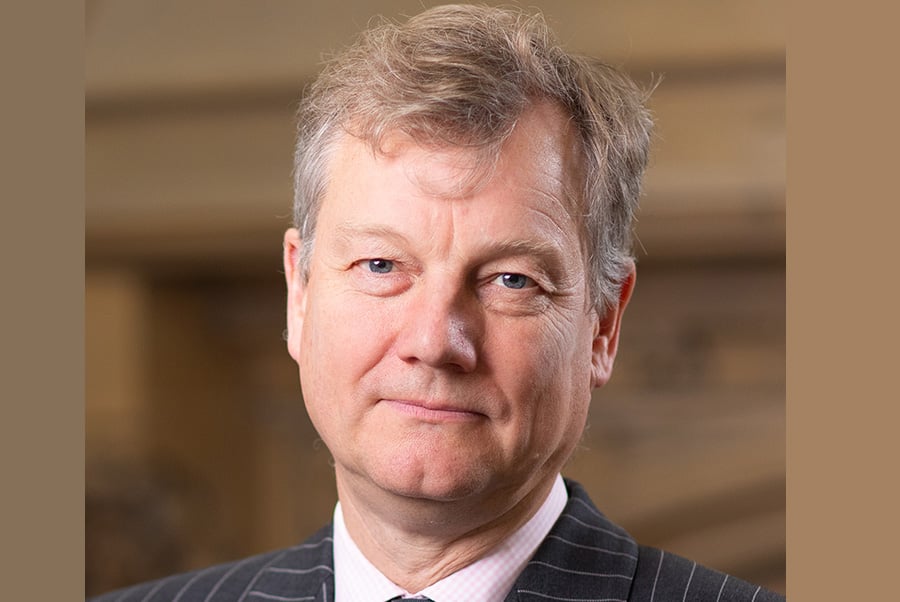

Sir Colin Birss has been approved as the Master of the Rolls following the retirement of Sir Geoffrey Vos.
In a statement released last week, the Courts and Tribunals Judiciary said: “His Majesty King Charles III has been pleased to approve the appointment of Sir Colin Birss as the Master of the Rolls.
The Lady Chief Justice, Baroness Carr of Walton-on-the-Hill, added: “I am delighted that, today, the King has appointed Sir Colin Birss as the Master of the Rolls. Sir Colin has served as the Chancellor of the High Court and, before that, as the Deputy Head of Civil Justice. Amongst many other roles, he has also been the Lead Judge for Artificial Intelligence. His judicial and leadership experience, alongside his technological and digital expertise, make him ideally placed to take on this important role.”
Sir Colin was called to the Bar in 1990 and took Silk in 2008. He started his judicial career as a deputy chair of the Copyright Tribunal in 2009. He was appointed as a specialist circuit judge in 2010, as a high court judge assigned to the Chancery Division in 2013 and, in 2021, as a judge of the Court of Appeal and deputy head of civil justice. In 2023 he became lead judge for artificial intelligence. He is currently the chancellor of the High Court.
The Master of the Rolls is the president of the Civil Division of the Court of Appeal of England and Wales and head of civil justice. They are second in judicial importance to the Lady and Lord Chief Justice.
The post holder is responsible for the deployment and organisation of the work of the judges of the division as well as presiding over the most serious and complex civil cases in the court. They also have pastoral responsibility for all Court of Appeal judges. As head of civil justice, they oversee the work of judges in around 140 county courts.
The Master of the Rolls is chair of the Civil Procedure Rule Committee, which develops the court rules for the Civil Division of the Court of Appeal, High Court, and County Court. They may also chair the Online Procedure Rule Committee, which makes the rules for online court and tribunal proceedings across the Civil, Family, and Tribunal jurisdictions. They are also chair of the Civil Justice Council.
Originally responsible for the safe keeping of charters, patents and records of important court judgments written on parchment rolls hence the title, the Master of the Rolls still has responsibility for documents of national importance, being chair of the Advisory Council on Public Records, the Forum on Historical Manuscripts and Academic Research, and the Manorial and Tithe Documents Advisory Panel.
The appointment was made by on the advice of the Lord Chancellor, following the recommendation of an independent selection panel chaired by the Lady Chief Justice.
Law Society of England and Wales vice president Brett Dixon said: “We warmly welcome the appointment of Sir Colin Birss as the new Master of the Rolls.
“Having worked closely with him for many years as part of the Civil Procedure Rule Committee and latterly on digital justice projects, I know he is well placed to oversee civil justice in the courts of England and Wales.
“We look forward to working together on matters of shared interest including civil justice, the fair and responsible use of AI in the justice system and supporting access to justice for all.”