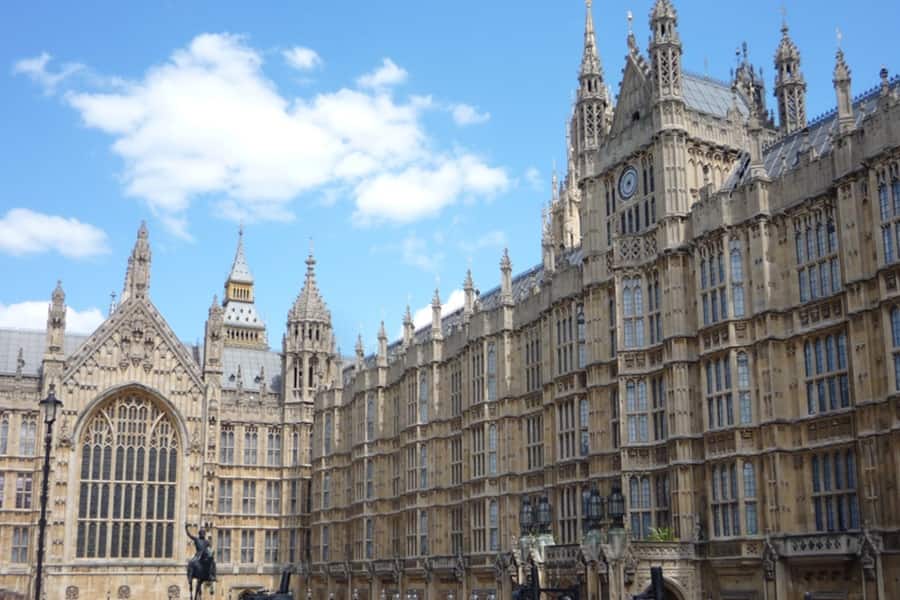

The High Court has ordered the sale of a former matrimonial home with the wife to receive 90% of the net proceeds, after ruling an alleged loan of £1.6 million had been fabricated by the husband to frustrate her claim.
Mr Justice Peel’s decision in Fisayo Olaoluwa Awolowo v Olusegun Samuel Awolowo was handed down last month following a two-day final financial remedy hearing under Part III of the Matrimonial and Family Proceedings Act 1984, bringing what he described as “bitterly fought litigation over many years” to an end.
The ruling followed a re-hearing in December 2025, ordered by the Court of Appeal in May 2025, which had overturned a 2023 first-instance decision accepting the loan as genuine. Leave was first granted in October 2018, with Mr Justice Peel explaining the reason for the delay being “the determination of the husband (H) to attempt to thwart at every turn W’s claims”.
“In particular, he has falsely asserted that the equity in the former matrimonial home [in Hendon, pictured] (“FMH”) is almost entirely extinguished by a debt owed to his brother’s company.”
The debt allegedly arose out of a £1.6 million loan agreement in August 2009 between H and his brother’s company, with the sum claimed to have been used to buy the FMH without a mortgage.
In March 2018, H’s brother’s company sued H in Nigeria on the loan, and the following March judgment was entered against H by a Nigerian court for the full amount. That order was registered in the Queen’s Bench Division in April 2019 and an interim charging order made against the FMH in favour of H’s brother’s company.
Mr Justice Peel explained:
“The consequence of the above was to denude the FMH (thought to be worth about £2m now) of most of its equity in favour of the alleged £1.6m debt owed to H’s brother’s company and secured on the FMH. Any surplus over and above the debt would be taken up by legal fees. W, accordingly, would have been left without a home, and no assets against which she could lay claim in this jurisdiction.”
In a September 2023 hearing the loan was found to be genuine. That finding was overturned by the Court of Appeal in May 2025, with a rehearing ordered and H and his brother’s company ordered to be the costs of the appeal.
The rehearing was allocated to Mr Justice Peel in December, who determined:
i) that no debt of £1.6m (or any part thereof) was owed by H to his brother’s company.
ii) that the registration of the Nigerian order in the Queen’s Bench Division should be set aside.
iii) that the charging order should be set aside.
iv) discharged H’s brother’s company from the proceedings.
v) directions to a final hearing of the substantive Part III application.
H (63) and W (41) are both Nigerian by birth and background and have four children, one of whom requires round-the-clock care, mainly provided by W. The family moved to the UK from Nigeria in 2009, with H intending to expand his hotel business. The parties separated in February 2015; W and the children continued to live in the FMH in Hendon, North London. H returned to Nigeria and has had no face-to-face contact with the children since 2017.
The main asset in dispute, the FMH, was bought in December 2009 for £1.35 million without a mortgage. A second property in Harlington, Hayes, was bought in 2010.
Both parties issued their own divorce petitions; H in Nigeria, W in England. A decree nisi was pronounced in Nigeria in September 2018. The judgment of the court also provided for W to move out of the FMH to “an alternative apartment of a mortgage of £300,000 worth in value to be borne by [H],” following which W withdrew her petition.
W applied for permission in October 2018 to seek financial relief after an overseas divorce under Part III of the MFPA 1984. Permission was granted and that application formed the substantive claim before the court.
In 2019 the family court made an interim maintenance order in favour of W, for £1,000 per month to be paid by H, which has not been paid. Additional child maintenance at £400 per month was paid until September 2025. Unpaid maintenance at the time of the hearing amounted to £72,000.
With the FMH now free of charge save for a relatively small sum secured for unpaid school fees, it represented the only visible asset available for distribution. The burden had been on the husband to prove the debt, which Mr Justice Peel rejected after assessing credibility and documentation.
He found W to be “patently honest” but said H was “belligerent, went off on tangents, did not answer questions directly and, as before, tried to hide behind the corporate identity of his own companies to distance himself from assets”.
In departing from equality, and being asked to take physical, emotional and financial abuse into account as behaviour as being inequitable to disregard (s25(2)(g) of the Matrimonial Causes Act as applied by s18(3) of the MFPA 1984), the judge concluded:
“Insofar as W refers to personal misconduct (physical and emotional abuse) during the marriage which has no discernible financial impact, it seems to me that this factor does not materially add to the outcome which I provide for by this order.
In this case, it seems to me that the more significant factors for the purpose of the s25 exercise are
(i) H’s non-disclosure,
(ii) W’s legal costs are a direct result of H’s litigation manoeuvring,
(iii) H has not complied with court orders and is in substantial arrears,
(iv) W has been the sole carer of the children since separation and will continue to be so, (v) W’s housing needs are greater than H’s because of her care for the children,
(vi) because W’s debts have to be paid from the net proceeds of sale of the FMH, and will not be paid by H, it is unfair for her award to be reduced merely because the proceeds of sale (after payment of debt) is reduced and
(vii) if H has debts because of his legal costs, that is entirely down to him and should not be visited upon W indirectly by him taking a higher share of the proceeds to repay those debts.”
The FMH was ordered to be sold and marketed for no less than £2 million, with W to have sole conduct of the sale.
After costs and settlement of the outstanding school fees, W is to receive 90.21% of the net proceeds up to net equity of £1,940,000, with H receiving 9.79%. Any net equity above £1,940,000 is to be divided equally between the parties.
The percentage division reflects a needs-based calculation including provision for W’s debts, housing of £1 million and capitalised child maintenance, and £72,000 in unpaid maintenance. The proceeds of the Harlington property are to be retained by H.
The court also ordered a clean break between the parties, set aside all interim orders and directed that no further child maintenance should be sought by the wife, who is to indemnify the husband if such claims arise. No separate order as to costs was made.
Fisayo Olaoluwa Awolowo v Olusegun Samuel Awolowo [2026] EWFC 31