
The risks of cocaine in a family setting
Cocaine is one of the UK’s most popular drugs and its use continues to grow. Last year, 20% of people entering treatment for drugs were attributed to cocaine, up from 19% the year before. The drug continues to be a concern for family law practitioners due to its potential to increase aggression, anxiety, paranoia and long-term effects on physical health, including heart attacks. All these effects pose a safeguarding risk to children as their primary caregiver may not have the capacity to fully cater to their child’s needs.
Lextox frequently receives court orders for cocaine analysis as part of parental capacity assessments, so how can we test for the drug, how far back does analysis go and how reliable is it?
Can cocaine be detected in hair?
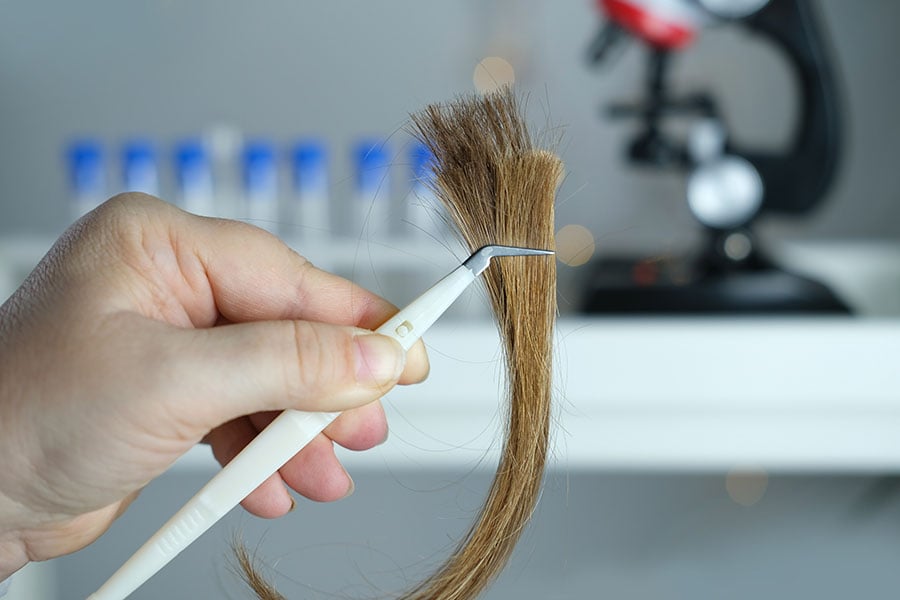
In short, yes, and this is due to the way hair grows, as well as how cocaine incorporates into it. When cocaine is taken, it breaks down (metabolises) in the blood into metabolites. Lextox test for multiple metabolites, but the major cocaine metabolite is benzoylecgonine. As the hair grows, cocaine and metabolites, including benzoylecgonine incorporate into the strands. Thus it being a reliable way to establish use through hair testing and is frequently used in UK family courts.
How long does cocaine stay in hair?
As cocaine incorporates into hair growth, it may remain for the lifetime of the hair, especially if the hair has not been chemically treated. However, when analysing for cocaine, the court usually requests a specific timeframe.
Hair typically grows approximately 1cm per month, which means 1cm of hair equates to approximately one month, so analysis can go back as far as the sample allows. If the court orders a six-month segmented analysis, for example, and the individual has repeatedly used cocaine but then stopped at month four, we would expect a detected result for the first four months, then a sharp decline and continued reduction / not detected results for the subsequent months.
How accurate is hair testing for cocaine?
Hair drug testing is extremely accurate. At Lextox, we use the analytical technique LC-MS/MS (Liquid Chromatography-Tandem Mass Spectrometry) to identify and quantify cocaine and benzoylecgonine within the hair sample. This highly sensitive and accurate confirmation technique separates the different compounds in a sample, confirms their identity based on their unique chemical characteristics and quantifies the level detected.
Expert interpretation also has an important role to play when it comes to interpreting and understanding cocaine hair test results. The highly trained and experienced expert will take all relevant factors into account to give an accurate interpretation of if a service user has taken the drug. For example, if the service user has declared chemical hair treatments, the expert will consider this when establishing whether a detected result or pattern is likely from cocaine use during the requested time period.
When the results and interpretation is submitted as evidence, it’s important it is reviewed alongside other evidence, such as psychological assessments or witness statements. This increases the certainty of painting an accurate picture of any parental substance misuse and safeguarding risks.
Can one-time use be detected and can usage be dated?
When the results are interpreted, a cut-off level is applied so that only amounts detected above this level are reported as detected. This is to ensure confidence that the donor is actively using as opposed to solely being exposed to other drug users, as this is what the court usually wants to establish. However, it is possible a one-time use may go undetected, especially if the hair has been chemically treated.
In addition, usage cannot be pinpointed to a specific date, however, patterns and trends of use/cessation can be profiled.
Hassle-free hair drug testing for family court
If you require family court evidence for cocaine use, Lextox can support. While the scientific process of detecting cocaine in hair is complicated, our team aim to make the service hassle-free so you have more time to focus on casework. For more information on our services, email experts@lextox.co.uk or call 029 2048 4141.