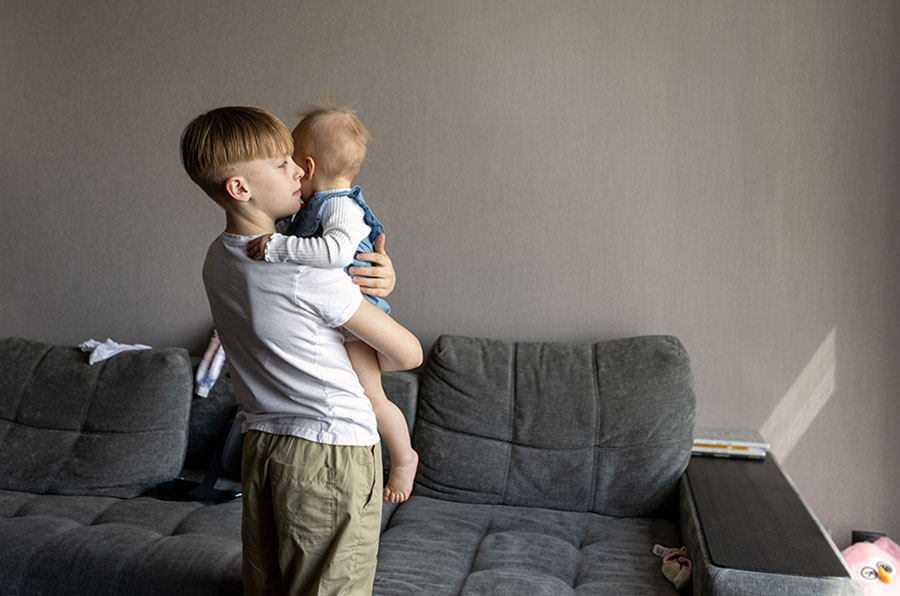

Children in care will be better supported to build and maintain relationships with their siblings under new measures brought forward in law by the government.
All local authorities in England and Wales will be required to promote and facilitate contact for children in care who are separated from their siblings. The change puts sibling contact on an equal footing with parental contact and recognises the vital role these relationships play in providing stability, continuity and emotional support, the Department for Education said in a statement announcing the move.
Currently, sibling relationships are not prioritised as much as parent relationships for children in care by local authorities. Many care-experienced people have talked about the difficulties of losing contact with siblings after being placed in care and the long term impact this can have.
The new legislation will ensure that local authorities will do all they can to provide sibling contact, including half and step siblings. It will apply unless it is not in children’s best interests, such as in cases of violence or abuse or where social workers have other concerns about wellbeing.
“It’s a travesty that children in care can end up losing contact with their brothers and sisters when they go into care, and we want that contact to be maintained wherever possible for the sake of their emotional stability and their futures,” said children’s minister Josh MacAlister.
“Every child’s circumstances are different, but this amendment is aimed at making life better for more vulnerable children and giving them the best possible start in life.”
Chris Hoyle, who was in the care system as a child, explained the importance of his relationship with his brother.
“After being initially separated, being reunited with my brother in the same foster placement changed my life. My brother is the longest relationship I have ever had, by some distance. How do you define the value of that? How do you put a price on still being in contact with the person who loved you first? I can’t.
“Jonny is a rock in my life. A 6’2 rock who supports the wrong football team. He keeps me grounded in my identity and provides a safety net that has lasted a lifetime.
“The Department for Education once called us ‘The Hoyle Brothers’. We are a package deal thanks to the bravery of senior staff who decided that sharing a bedroom was not worth losing something that cannot be bought.
“Wherever it is safe and possible, the relationships of siblings in care should be a priority. Those relationships can last a lifetime and are priceless.”
The amendment to the Children’s Wellbeing and Schools Bill was welcomed in the House of Lords on Wednesday 25 March, following continued discussions with stakeholders and parliamentarians. Final confirmation is expected following further debate in the House of Commons after Easter.
The change forms part of the government’s wider work to reform children’s social care and ensure that every child has the opportunity to grow up in a stable, loving environment.
This includes reducing care placements far from home and allocating £10.8 million for an expansion of Regional Care Co-operatives to enable better placement planning for children in care.
The DfE is also supporting more siblings in care to stay together with plans to create 10,000 more foster care places, backed by a total investment of £88 million, including £25 million to expand existing foster carers’ homes so they can foster more children, including sibling groups.
Tom Wright is senior associate in the family team at Birketts LLP. He said of the changes: “When children enter the care system, separation isn’t just from parents. All too often, it also means losing regular contact with siblings – the very people who provide continuity, shared history, and emotional safety.
“For many children in care, siblings are their anchor in a system defined by change – they often have to deal with new placements, new schools, new professionals and changing care plans. Therefore, maintaining those relationships can improve emotional wellbeing, strengthen identity, reduce feelings of isolation, and support placement stability. Adults with care experience consistently describe sibling relationships as among the most protective factors throughout their lives.
“Sibling contact shouldn’t be treated as a logistical afterthought or a ‘nice to have’. It’s a core part of safeguarding a child’s welfare and respecting their right to family life. The better question is not why siblings should see each other – but what would justify breaking that connection?”