
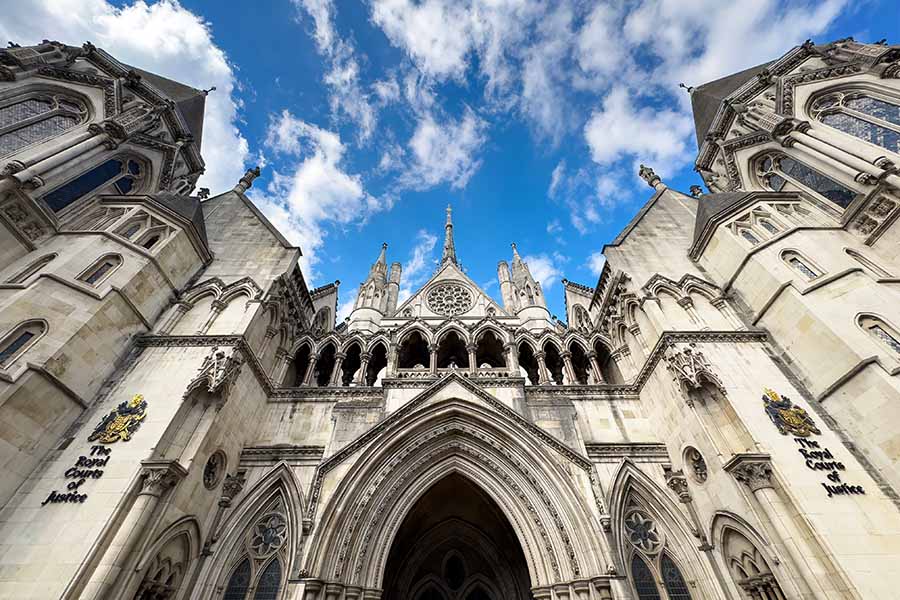

D (A Child) (Recusal) addresses the recusal of a High Court judge, in a hearing which examined three linked appeals. The decision also examines the use of AI by litigants in person, which the Court of Appeal finds to be “entirely understandable,” but cautions against relying on AI-generated case citations.
The parties to the proceedings in D (A Child) (Recusal) are the parents of D, a boy born in 2023. The Court of Appeal hearing in October 2025, handed down in December, relates to three linked appeals. The original cases were proceedings brought under the Children Act 1989 involving applications for child arrangements.
In May 2023, D’s father filed an application in the Manchester Family Court seeking contact with D. The mother opposed the application, raising allegations of domestic abuse and applying for a non-molestation order.
The first fact-finding hearing took place over three days in October 2024 in St Helens, before District Judge Hatton. Both parties were litigants in person, with qualified legal representatives in place for cross-examination.
Twelve allegations of abuse were raised by the mother: six were not proven and the remainder were not established as abuse, welfare concerns, or as presenting any risk to D. The need for a non-molestation order was “not made out,” DJ Hatton said in his written judgment of 5 November 2024. The mother’s application was dismissed and “no compelling reason” was found not to grant the father parental responsibility. Following the hearing, an order was made giving case management directions, including provision for a Cafcass report.
A dispute resolution hearing was arranged for 24 February 2025 and further directions were given for interim child arrangements. In recitals to the order, DJ Hatton noted he had received “a lengthy document” from the mother, which he had considered before handing down the final version of his judgment.
The mother sought permission to appeal on 8 November 2024. In a 25-page document, she made a large number of detailed criticisms of the judge’s findings and reiterated her allegations and arguments about the father’s conduct.
HH Judge Greensmith dismissed the application in January 2025, noting: “The district judge carefully, clearly and correctly identifies the role of the court and the purpose of the hearing in the judgment,” and that he could not see “how the findings made by the judge were wrong or where there has been a serious procedural irregularity in the proceedings.”
However, he informed the mother that, as the decision had been made without a hearing, she had the right to ask for it to be reconsidered at an oral hearing.
Later in January, a second application was filed by the father for the enforcement of the interim order.
The mother then wrote to DJ Hatton asking that he recuse himself from the appeal, citing “substantial concerns regarding misrepresentation of evidence,” and claiming the district judge had “compromised the fairness of [the] findings in these proceedings.”
Enclosed with this letter was a 60-page document in which the mother set out at great length her complaints about the judgment and findings.
Referring to the document in its written decision, the Court of Appeal noted it had “quoted many passages from the judgment, each followed by the mother’s extensive challenges and criticisms… The document included a number of citations of reported cases. Some citations were correct and appropriate…however, other cases cited were not authority for the propositions for which they were advanced and, in some instances, did not exist at all”.
On 3 February 2025, the Family Court at St Helen’s made an order on the father’s first enforcement application, which had been transferred from Manchester. Acknowledging the link between the father’s originating application and the mother’s subsequent application, the court said it could not ascertain whether the latter was concluded and referred the matter to DJ Hatton to consider whether it should be transferred to St Helen’s.
On 6 February 2025, DJ Hatton made two orders, the first recusing himself from the father’s application and the second transferring the mother’s application to the Family Court at St Helens.
On 14 February 2025, the oral renewal hearing of the mother’s application for permission to appeal was granted by Judge Greensmith at Manchester. Directing the mother to file various documents, Judge Greensmith would give further director and list the appeal following receipt. The father’s application for a child arrangements order was stayed pending determination of the appeal.
On 27 February 2025, the father filed an application seeking an order that the matter remain listed in Manchester and reserved to DJ Hatton.
On 31 March 2025, having considered the documents provided and the transcript of the hearing before DJ Hatton, Judge Greensmith made a further order allowing the mother to ask for the decision to be reconsidered at an oral hearing, with the request to be filed within seven days, and restricting the grounds for appeal to two claims.
The mother did not submit an application for reconsideration at an oral hearing, or seek permission to appeal against the restricted grounds for appeal.
On 21 July 2025, the hearing of the mother’s appeal took place before Judge Greensmith, with the mother appearing in person and the father represented by Ms Linda Sweeney, as counsel. At the outset, the mother objected to Ms Sweeney appearing for the father and requested that she be recused, which was denied.
Referring to the recusal of DJ Hatton, the mother suggested that this indicated he had acknowledged bias.
Although noting there was nothing on file to suggest this was DJ Hatton’s reasoning, Judge Greensmith stated:
“The judge has agreed he should recuse himself without saying why and for that reason, I cannot see how the judgment of District Judge Hatton can stand.”
The father was refused permission to appeal.
The following day, the mother filed a further application for the recusal of Ms Sweeney. On 24 July, the father filed an application seeking clarification from the district judge on his decision to recuse himself. Both applications were dismissed by Judge Greensmith as “totally without merit” and warned both parties further applications would result in the court considering a civil restraint order.
Meanwhile, on 28 July, the father had filed notice of appeal to the Court of Appeal against the decision to set aside the findings of DJ Hatton, which was granted. A further appeal was filed with Manchester Family Court on 8 August, seeking permission to appeal out of time against the recusal decision and inviting the court to “leapfrog” the case to the Court of Appeal to allow both cases to be heard together.
A third notice of appeal was filed on the 8 August, seeking permission to appeal against Judge Greensmith’s order of 31 July dismissing the father’s application for DJ Hatton to give reasons for his recusal decision. Again, the application requested the matter be heard by the Court of Appeal.
All requests were granted in a series of subsequent hearings and all three appeals were heard by the Court of Appeal on 23 October 2025. Lord Justice Baker delivered the judgment, with which Lord Justices Cobb and Miles agreed.
In relation to the appeal brought by the father against DJ Hatton’s recusal decision, the court held that the mother’s application, when viewed objectively, revealed no suggestion of apparent bias within the legal meaning.
After summarising “much repetition” in the mother’s argument, Lord Justice Baker found that merely disagreeing with judicial evaluation of evidence is not bias, and he was “satisfied that there is no merit in the mother’s assertion of bias.”
However, he acknowledged the process by which the district judge had recused himself was irregular and he had failed to allow the father any opportunity to respond, or given any reasons for his decision. Allowing the first appeal, the court ordered the two orders made by DJ Hatton on 6 February 2025 to be set aside.
The second appeal, brought by the father against the order of HHJ Greensmith of 21 July 2025 was also allowed. “There was no bar to Judge Greensmith considering the issue of the recusal in the context of the appeal but fairness required him to take steps to establish the reasons for the district judge’s decision and inform the parties so that they were in a position to respond,” Lord Justice Baker noted.
“Instead, having heard submissions as to whether he should proceed to hear the appeal, the judge returned after the short adjournment and delivered a judgment allowing the appeal. The course he took denied the father a fair opportunity to address the new proposal that the findings be set aside on a wholly different basis from that which he had anticipated.”
The case was remitted to HHJ Singleton KC, designated family judge for Manchester.
On the third appeal, that HHJ Greensmith was wrong to dismiss the father’s application to be provided with reasons for DJ Hatton’s recusal decision, and HHJ Greensmith was wrong to mark the father’s application as totally without merit, Lord Justice Baker found it unnecessary to ask DJ Hatton to give his reasons for recusal on the basis the order had been set aside. The certificate that the father’s application was totally without merit was, however, set aside.
With regard to the mother’s use of artificial intelligence to help prepare her submissions, Lord Justice Baker said he was sympathetic to her position as a litigant-in-person and the use of AI was “entirely understandable”.
Absolving the mother of any intention to mislead the court, Lord Justice Baker noted that, “litigants in person are in a difficult position putting forward legal arguments”.
Nevertheless, he warned that “all parties – represented and unrepresented – owe a duty to the court to ensure that cases cited in legal argument are genuine and provide authority for the proposition advanced”.
Expressly addressing the phenomenon of AI “hallucinations” in legal submissions, the Court of Appeal observed:
“There are a growing number of reports of ‘hallucinations’ infecting legal arguments through the citation of cases for propositions for which they are not authority and, in some instances, the citation of cases that do not exist at all.”












One Response
A perfect storm of a litigant in person producing lengthy AI generated documents, making multiple applications including recusal of both Judge and Counsel, refusing to accept the reasoning of the court together with a slow and antiquated system that has not caught up. AI loves you and will tell you what you want to hear so no doubt churned out superficial documents that (to give the mother the benefit of the doubt) reinforced her beliefs. Meanwhile no mention of the child or children. It would seem they have not seen their father since his application in 2023. This cannot be right.
We are now reaching a critical juncture when the family court system needs wholesale reform because this is not an isolated case, this is now commonplace with 85% of family cases having at least one litigant in person and of course they are going to turn to AI for assistance.