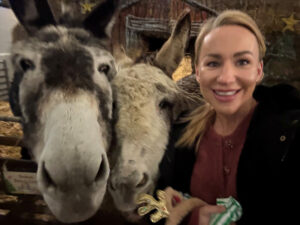
When Harrogate Family Law partner Stephanie Douthwaite met two donkeys on a family day out, she gained an unexpected lesson in negotiation.
Anyone who has ever tried to move a donkey that doesn’t want to be moved knows for sure that brute force is useless. Strangely enough, this makes the donkey an excellent teacher in negotiation, and this is something that we family lawyers need to do well.
The first rule of negotiating with a donkey is to understand motivation. Donkeys are not stubborn for the sake of it, but rather they do not see a reason to cooperate. You need to identify what matters to them, such as safety, comfort, food or familiarity. Until you do this you are wasting your energy.
In family law, that same principle can apply to a negotiation. Parties to a divorce or child arrangements dispute are rarely simply being difficult without reason (although that is not always the case!). Fear, loss of control, genuine concern for the children, financial insecurity or vulnerability are often drivers for resistance. Until those concerns are acknowledged, progress will be difficult.
Timing also matters. A donkey that is tired, hungry or overwhelmed will not negotiate – and as all parents know, this can also apply when trying to negotiate with children! The best approach here can be to pause and try again later.
In family law negotiations this can translate to emotional readiness. We often say the emotions that arise in a divorce are very similar to those in the grief cycle. Negotiations conducted at the height of anger are likely to fail. Skilled family lawyers, and especially those who are collaboratively trained, know the value of slowing things down where necessary – especially if you want lasting solutions.
With a donkey, the relationship is important. You cannot outrank a donkey into compliance. Trust is important. Heavy handed tactics, threats or legal posturing can escalate conflict, and this can be especially important to bear in mind when ongoing co-parenting is going to be required. Collaboration and respect can achieve better, longer lasting outcomes.
With a donkey, you don’t ask it to cross the entire field all at once – you ask for one step at a time. In a negotiation, sometimes it can be more manageable when broken into smaller agreements, reached one step at a time. Each resolved issue can build momentum and confidence.
Finally, it can be important to know when to stop pulling. Sometimes ultimately, there is a stalemate, and this can require a different strategy altogether such as arbitration or court proceedings.
So, whilst we can’t always guarantee that a donkey or a divorcing counterpart will be persuaded with your preferred way forward, we can learn some useful skills from negotiating with a donkey.
Patience, empathy and strategic humility can be valuable in effective family law negotiations. Like the donkey, a divorcing spouse may then walk forward your way more willingly.
About the author
 Stephanie Douthwaite is a partner at Harrogate Family Law advising business owners, company directors and their spouses in financially complex divorces. She regularly advises on wealth protection matters involving nuptial agreements. Stephanie is skilled in collaborative resolution, working with a range of non-court dispute resolution options to help clients to avoid Court. She is also very skilful at uncovering hidden assets, challenging poor disclosure and managing high-conflict personalities. Stephanie also represents parents in complex Children Act cases, offering robust, supportive and solutions-focused guidance.