
A psychotherapist who attempted to block being named in the judgment on a case for which she was a witness has had her bid for anonymity refused by the Court of Appeal.
Aimee Dover, a witness of fact relating to private law proceedings, appealed to have a judgment containing “significant criticisms of her professional conduct” anonymised.
However, appeal judges concluded that witnesses “generally have no legitimate ground of appeal in respect of adverse findings contained in a judgment”.
In an appellant’s notice, Dover requested an appeal on the grounds that the judge “erred in law” by “making serious and professionally damaging findings against [her]” in the judgment on the case, without granting her “the opportunity to intervene and defend herself.”
The case follows children proceedings from October 2020, initiated by the father of a child, known as E, and a fact-finding hearing held in October 2024. Dover was a witness for the mother and gave evidence at the fact-finding hearing, during which she was cross-examined.
The fact-finding judgment contains adverse findings of fact and significant professional criticisms about Ms Dover, particularly concerning her work with D, a sibling of E. Dover began working with D in a therapeutic capacity in February 2022 and continued to do so on a regular and frequent basis until December 2023, when D took her own life.
Following the circulation of the draft judgement on the case in April 2025, Dover notified the judge that it was her “wish to have her name redacted from the judgment should it be published, for both personal and professional reasons”.
The judgment was handed down in private in the absence of Dover and the issue of its publication was adjourned to a hearing fixed for 10 June 2025.
The judge heard arguments from both sides, including on a second issue of whether Dover’s conduct should be disclosed to her regulatory body and current employers. The solicitor representing her, Paul Hepher, said this was for the court’s discretion.
On 16 July 2025, the judge handed down her reserved judgment on the disclosure and publication issues. She concluded that the judgment should be passed to the regulatory body and Ms Dover’s employers.
On the question of anonymity, the judge rejected the arguments and concluded that the published judgment should name Dover.
On 29 July 2025, Dover filed an appeal, stating:
“I wish to appeal against the findings made against me and I wish to appeal against the decision to publish my name in the judgment.”
It argued that including Dover’s name in the judgment would “[risk] a chilling effect on the willingness of therapists and other mental health professionals to engage with family court proceedings.”
E’s father and guardian resisted Dover’s application for anonymity. E’s mother, for whom she appeared as a witness, was neutral.
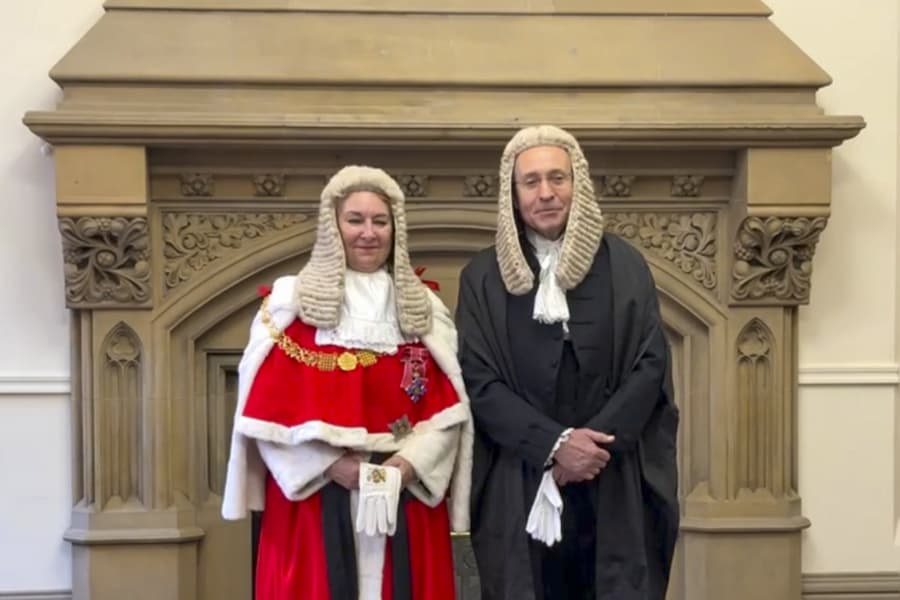
Lady Justice King and Lord Justice Warby, in a judgment handed down remotely on 2 December, said:
“The argument in this court, that Ms Dover’s professional conduct was an irrelevant matter, outside the scope of the Children Act proceedings, is the direct opposite of the submission her counsel made to the judge, that the findings about the applicant were at the heart of the judgment.”
They added:
“A witness of fact will generally have no legitimate ground of appeal in respect of adverse findings contained in a judgment, provided the criticisms have been fairly put to the witness in cross-examination for comment or response before the findings are made. A witness who is at risk of adverse findings does not, for that reason, have any right to intervene or to have legal representation.”
Commenting on the ruling, 3PB Barristers’ June Venters KC, who represented the father in the Court of Appeal, said:
“The key message is that a court is entitled to make adverse findings and significant criticisms of a witness, provided that the criticisms and their factual basis have been fairly and properly put to the witness during cross‑examination.
“A witness who faces the possibility of adverse findings does not, by reason of that risk alone, acquire any right to intervene or to be legally represented.”
This clarification is of considerable practical importance, 3PB added in a statement.
“It confirms that judicial criticism, when grounded in fair process, does not trigger additional procedural rights for witnesses. The ruling is likely to prevent unnecessary delay and expense in family proceedings, thereby alleviating pressure on an already overstretched court system.”
Venters added:
“In Ms Dover’s case, the court found that because she was challenged extensively on her conduct and had a fair opportunity to respond when being cross examined, the adverse findings were sustainable.
“Conversely, the procedure in the earlier case of Re W was deemed fundamentally unfair because the adverse findings were made entirely without prior notice—they “came out of the blue,” only surfacing in the final written judgment.
“The principle established is: Fair process validates judicial criticism; surprise invalidates it.”