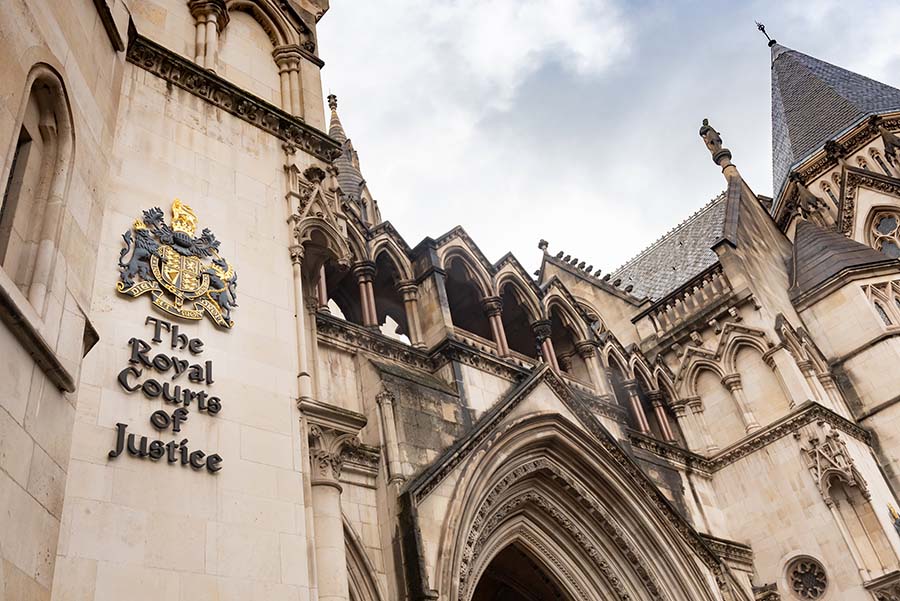
An order allowing a hospital trust to remove ventilation and other intensive care support from a child has been set aside after the Court of Appeal ruled the High Court hearing in which the decision was made was procedurally unfair.
In R (A Child), the parents of the child appealed on the grounds the hearing was procedurally unfair as they were not legally represented, and had no feasible opportunity to review medical records, understand legal issues, adduce evidence, prepare to question witnesses or properly participate.
The order had been made by Mrs Justice Judd in the High Court of Justice Family Division on 7 November, following an application by the trust in which R was receiving care. R was admitted to hospital on 29 October, after what the Court of Appeal described as ‘a tragic event’ that was ‘utterly heartbreaking for R’s parents, siblings and wider family’.
On 4 November, following several investigations including a CT scan of the brain, a CT angiogram, and two separate brain stem tests demonstrating no brain stem function, the parents were informed treatment would be withdrawn. Disputing the decision, the parents were advised to seek legal advice. On 5 November, the parents advised the hospital they had been in contact with lawyers but had not formally appointed anyone.
The trust’s application for an urgent declaration was made on 6 November. The same day, documents relating to the hearing, including the trust’s position statement, a draft order, medical records and statements from consultants involved in R’s care, were sent to the parents between 9.30 am and 7pm, some by email and some given to the parents at the hospital during the evening of the 6 November.
In the hearing on 7 November, which the parents attended remotely from the hospital, Mrs Justice Judd said she was satisfied the tests had been carried out ‘validly and rigorously’ and there were no gaps in the evidence, agreeing to make the order sought by the trust.
During the hearing at the Court of Appeal, Bridget Dolan KC for the parents submitted the application had proceeded with such speed and in such a manner that the parents were not given a proper opportunity to engage meaningfully in the proceedings and did not have legal representation, although they were entitled to non-means and non-merits tested Legal Aid.
They had not been able to file any evidence and were not able to effectively participate, giving them “no feasible opportunity to read the documents, to understand the legal case, to adduce their own evidence or to cross-examine the witnesses”.
Allowing the appeal, Lord Justice Moylan agreed the parents had not had an opportunity to engage meaningfully with the proceedings either before or at the hearing. He added:
“It is difficult to see how, in those circumstances, they could have been expected to respond substantively to the Trust’s evidence prior to the hearing or to have participated meaningfully in the proceedings. Even with legal representation, this would have been a challenge but, without it, it was, frankly, not achievable. The application was urgent but it was not so urgent that it required determination at the hearing on 7 November. Accordingly, I am satisfied that the process leading to the determination of the Trust’s application on 7 November 2025 was not procedurally fair and the order must, therefore, be set aside.”
Lord Justice Phillips and Lady Justice King agreed.
R (A Child) [2025] EWCA Civ 1504